
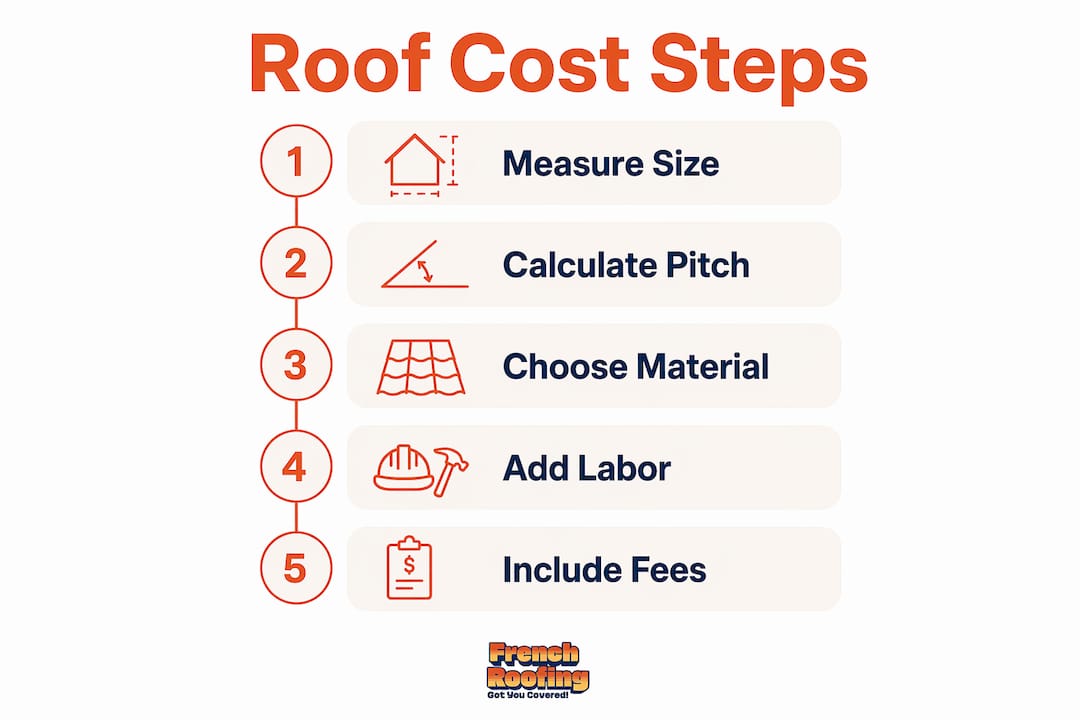
Roof replacement cost is calculated by multiplying your roof's total surface area (measured in roofing squares) by the per-square cost of your chosen material, then adding labor, permits, disposal, and any repairs uncovered during tear-off. For a typical 2,000 sq ft home, that math lands somewhere between $7,000 and $35,000 depending on materials and location, with most homeowners in the Portland metro area landing in the middle of that range. Understanding how each piece of that equation works gives you real power when you're reading contractor quotes and building a budget that won't fall apart the moment someone pulls up your first shingle.
How roof replacement costs are calculated: size and pitch
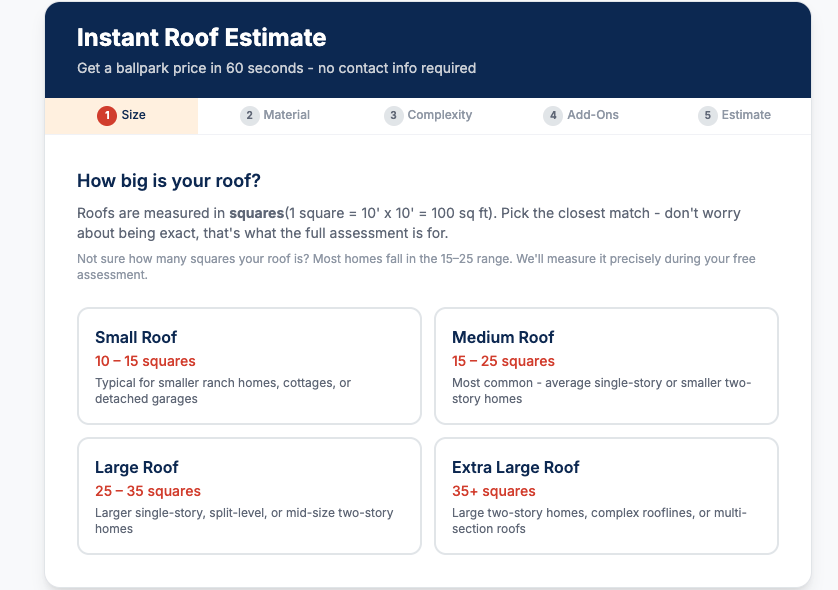
Roof size is the starting point for every estimate, but contractors don't measure your home's footprint. They measure your actual roof surface, which is 20 to 30% larger than your floor plan because of pitch, overhangs, and design features. A 2,000 sq ft single-story home typically has 22 to 24 roofing squares of actual roof area, where one roofing square equals 100 sq ft. That difference in measurement directly affects how much material your contractor orders and how many hours the crew works.
Pitch is the slope of your roof expressed as a ratio, like 6/12 (6 inches of rise for every 12 inches of run). A 6/12 pitch is considered a baseline moderate slope. Once you get above 8/12, the job gets physically harder. Steeper roofs require safety harnesses, slower movement, and more careful material placement. Steep pitch labor costs increase by 15 to 55% compared to a low-slope roof. That's not a small number on a $12,000 project.
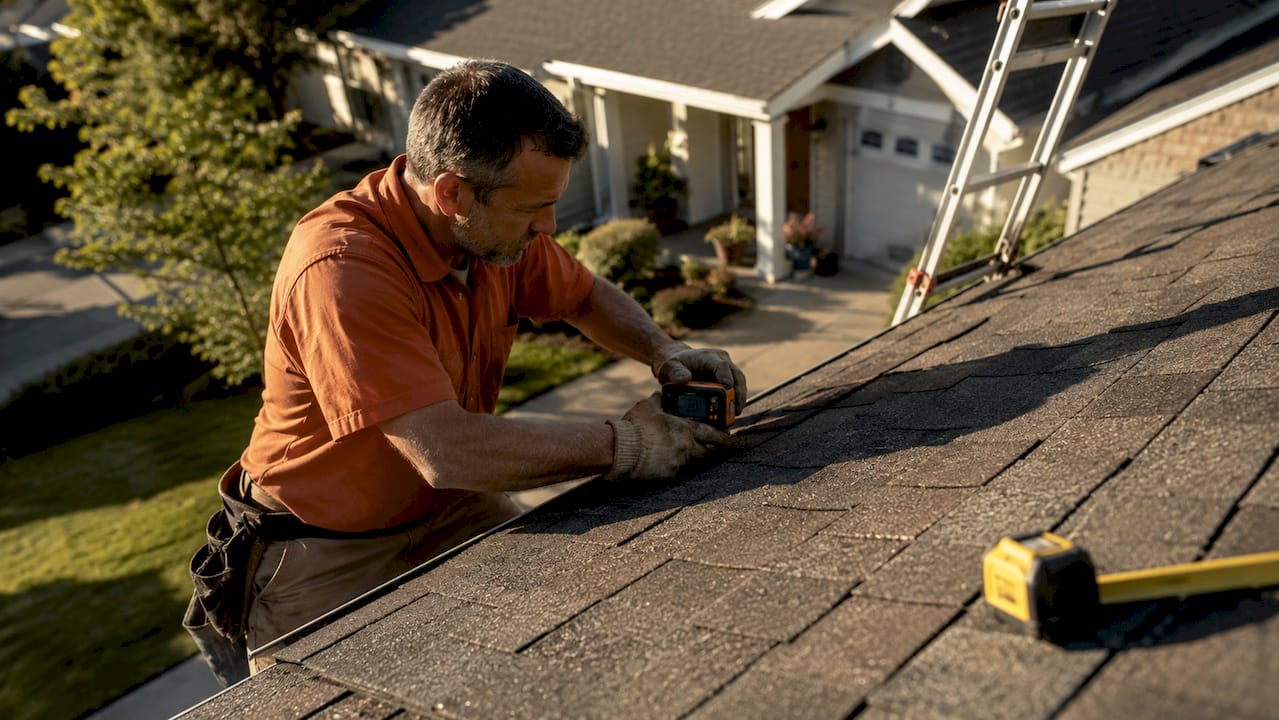
Roof complexity adds another layer on top of pitch. Dormers, multiple valleys, chimneys, skylights, and irregular shapes all require more cuts, more flashing work, and more time. A simple gable roof on a ranch house is the fastest and cheapest to replace. A Victorian with six roof planes and two chimneys is a different job entirely, even if both homes have the same square footage.
Pro Tip: Ask your contractor to show you the roof measurement report. Reputable contractors use tools like EagleView or GAF QuickMeasure to generate satellite-based measurements. If a contractor estimates your roof by just eyeballing your house from the street, that's a red flag.
What roofing materials do to your total cost
Material choice is the single biggest variable in calculating roof replacement cost, and the range is wide. Here's a straightforward comparison of the most common options:
| Material | Installed cost per sq ft | Lifespan |
|---|---|---|
| 3-tab asphalt shingles | $3.50 to $5.50 | 15 to 20 years |
| Architectural asphalt shingles | $4.50 to $7.50 | 25 to 30 years |
| Metal (standing seam) | $10 to $18 | 40 to 70 years |
| Concrete tile | $9 to $14 | 40 to 50 years |
| Natural slate | $18 to $30+ | 75 to 150 years |
Natural slate costs 4 to 6 times more than asphalt upfront, but it can outlast two or three asphalt roofs over its lifetime. That math matters if you're planning to stay in your home long-term.
For most homeowners, architectural asphalt shingles offer the best cost-per-year value. They cost more than basic 3-tab shingles but last significantly longer and carry better wind and impact ratings. A few things worth knowing about material costs in 2026:
- GAF, one of the largest shingle manufacturers in North America, raised residential roofing prices by 5 to 8% in April 2026, so quotes from late 2025 may be outdated.
- Material costs typically represent 30 to 45% of your total project price.
- Premium materials like metal and tile require specialized installation, which also raises labor costs beyond the material price alone.
- CertainTeed, Owens Corning, and GAF are the three most widely used shingle brands in the Pacific Northwest, and each offers multiple product tiers.
You can dig deeper into how these materials compare on durability and performance in this roofing material comparison guide from French Roofing.
How labor, location, permits, and disposal fees factor in
Labor accounts for 50 to 60% of your total roof replacement price. That's the majority of what you're paying, which is why two quotes using the same materials can still differ by thousands of dollars. Labor rates vary by region, crew experience, and the complexity of your specific roof.
Geographic location causes real cost swings. Coastal cities and high-cost metros run 25 to 40% above the national average due to higher wages and stricter building codes. Midwest and Southern rural areas tend to run 10 to 20% below average. Portland sits in a mid-to-high cost region, so local homeowners should expect pricing closer to the upper end of national ranges.
Beyond labor, a few line items show up on nearly every legitimate estimate:
- Permits: Most municipalities require a permit for a full roof replacement. Permit fees run $150 to $500 depending on your jurisdiction. Unpermitted work can void your homeowner's insurance and create problems when you sell.
- Tear-off and disposal: Removing your old roof and hauling away the debris typically adds $1 to $2 per sq ft to the project cost. On a 2,400 sq ft roof, that's $2,400 to $4,800 in disposal alone.
- Underlayment and accessories: Ice and water shield, synthetic underlayment, drip edge, and ridge cap are materials that don't show in the finished product but are required for a code-compliant, warrantied installation.
Pro Tip: Always ask for an itemized quote, not just a total number. A quote that breaks out materials, labor, permits, disposal, and accessories tells you exactly what you're paying for. A single-line quote is harder to compare and easier to pad.
Hidden costs that change your final roof replacement estimate
The number on your initial quote is rarely the final number. Several costs only become visible once the old roof comes off, and knowing about them in advance lets you budget without panic.
-
Decking repairs. Your roof deck is the plywood or OSB sheathing under the shingles. Water damage, rot, or delamination requires replacement before new shingles go down. Replacing decayed plywood adds $1,000 to $3,000 to a typical project, at roughly $50 to $100 per sheet. Budget at least a 10% contingency for this.
-
Code compliance upgrades. When a contractor pulls a permit for a full replacement, the job must meet current building codes, not the codes from when your house was built. Code upgrades typically add $400 to $1,200 or more and often include upgraded ventilation, ice and water shield in valleys and eaves, and wind-resistant fastening patterns.
-
Flashing replacement. Flashing seals the joints around chimneys, skylights, vents, and walls. Old or corroded flashing should be replaced during a re-roof, not reused. Reflashing a chimney or skylight runs $200 to $500 per item.
-
Overlay vs. full tear-off. Some contractors offer to lay new shingles directly over your existing layer, which can save $1,000 to $3,500 upfront. The tradeoff is a shorter lifespan for the new roof and the risk of voiding manufacturer warranties. Most reputable contractors recommend full tear-off for this reason.
Understanding these potential add-ons before you sign a contract is the difference between a budget that holds and one that blows up mid-project. This cost factors checklist from French Roofing walks through each item in more detail.
How to use cost calculations when budgeting and comparing quotes
Once you understand how roof replacement pricing is built, you can use that knowledge to evaluate bids with confidence rather than just picking the lowest number. A few practical steps make this easier.
- Get at least three itemized quotes. Each quote should break out materials, labor, permits, disposal, and any anticipated repairs separately. This lets you compare apples to apples instead of guessing why one bid is $4,000 lower than another.
- Ask for the roof measurement report. If two contractors measured your roof differently, their material quantities will differ, and so will their prices. Knowing your actual square count helps you spot errors.
- Build a contingency fund. Set aside 10 to 15% of your project budget for decking repairs and code upgrades. If you don't need it, great. If you do, you won't be scrambling.
- Factor in seasonal pricing. Regional labor shortages and weather-driven demand cause prices to shift throughout the year. Spring and fall tend to be peak seasons in the Pacific Northwest, which can affect contractor availability and scheduling.
- Check contractor credentials. A CertainTeed Certified contractor, for example, has met manufacturer training requirements and can offer extended warranties that non-certified installers can't. That affects the long-term value of your investment, not just the upfront price.
If you're weighing whether a repair might be enough to hold off a full replacement, this repair vs. replacement guide lays out the decision clearly.
Key takeaways
Roof replacement cost is determined by five core factors: roof size in squares, pitch, material choice, labor rates, and location, with hidden costs like decking and code upgrades often adding 10 to 20% beyond the initial quote.
| Point | Details |
|---|---|
| Measure in roofing squares | Actual roof area runs 20 to 30% larger than your home's footprint due to pitch and overhangs. |
| Labor is the biggest cost | Labor accounts for 50 to 60% of total project cost, making contractor selection critical. |
| Material choice drives range | Asphalt shingles start around $4.50 per sq ft installed; natural slate can exceed $30 per sq ft. |
| Budget a contingency | Set aside 10 to 15% for decking repairs and code upgrades discovered during tear-off. |
| Itemized quotes protect you | A line-by-line quote lets you compare bids accurately and spot missing or inflated line items. |
What I've learned after years of roofing Portland-area homes
Here's something I tell every homeowner I talk to: the pitch of your roof will surprise you more than anything else on the final invoice. Most people look at their house and think "yeah, it's a little steep," and then the quote comes in and they're caught off guard. A roof that looks moderately pitched from the street can be a 10/12 or steeper once you're actually up there, and that changes the labor cost significantly.
The other thing I see constantly is homeowners who get a low bid and take it without asking why it's low. Sometimes it's because the contractor skipped the permit, plans to overlay instead of tear off, or didn't account for decking replacement. Those savings evaporate fast once the job starts. Transparency in pricing isn't just nice to have. It's how you protect yourself.
My honest advice: get your quotes, ask for the measurement report, build your contingency, and choose the contractor you trust most to do the job right. Price matters, but a roof done poorly costs you more in the long run than a fair price paid to someone who does it right the first time.
— Sean
Get a transparent roof replacement estimate from French Roofing
French Roofing is a family-owned roofing company serving Damascus, Clackamas, Happy Valley, and the greater Portland metro area. Founded in 2014 by Sean French, the company is CertainTeed Certified, licensed, insured, and bonded (CCB #203933). Every estimate is itemized, every project is permitted, and every crew member treats your home with the same care they'd give their own.
If you're ready to understand exactly what your roof replacement will cost, skip the guesswork. French Roofing's roof replacement services cover everything from initial measurement to final cleanup, with financing available for homeowners who need it. Get Instant Estimate Online!
FAQ
What is a roofing square and why does it matter?
A roofing square equals 100 sq ft of roof surface area. Contractors use squares to calculate material quantities and labor time, so knowing your roof's square count is the foundation of any accurate cost estimate.
How much does a full roof replacement cost on average?
The national average for a full replacement on a 2,000 sq ft home runs approximately $11,200 to $13,500, with a broader range of $7,000 to $35,000 depending on materials, location, and roof complexity.
Does roof pitch really affect the price that much?
Yes. Roofs with a pitch steeper than 8/12 increase labor costs by 15 to 55% because crews work slower and need additional safety equipment. Pitch is one of the most underestimated cost factors in roofing estimates.
Should I choose an overlay or a full tear-off?
A full tear-off is the better long-term choice. Overlaying saves $1,000 to $3,500 upfront but shortens the new roof's lifespan and can void manufacturer warranties. Most reputable contractors recommend tear-off for any full replacement.
What happens if a contractor skips the permit?
Unpermitted roofing work can void your homeowner's insurance coverage and create legal complications when you sell your home. Always confirm your contractor will pull the required permit before work begins.