
Making the right roof repair vs replacement decision can save you thousands of dollars and protect your home from serious structural damage. A patch job on a failing roof might feel like the practical choice, but it often leads to a cycle of recurring costs that add up fast. The industry term for this evaluation process is a roofing condition assessment, and it covers everything from roof age and damage extent to repair history and long-term cost projections. This guide walks you through every factor you need to weigh before spending a single dollar on your roof.
Table of Contents
- Key takeaways
- The roof repair vs replacement decision: key factors
- How to assess your roof condition
- Cost comparison: repair vs replacement
- Repair approaches vs replacement methods
- Signs it is time to replace, not repair
- My take on this decision after years in the field
- How French Roofing helps you make the right call
- FAQ
Key takeaways
| Point | Details |
|---|---|
| Use the 25% cost rule | If repairs exceed 25% of replacement cost, replacing the roof is the smarter financial move. |
| Roof age matters most | Roofs over 15 years old with recurring damage typically need replacement, not another round of repairs. |
| Damage area is a clear threshold | When damage covers 30% or more of your roof, replacement is generally more cost-effective. |
| Professional inspection is step one | A qualified roofer can identify hidden defects that affect whether repair or replacement makes sense. |
| Replacement adds long-term value | New roofs offer better warranties, improved energy efficiency, and stronger resale value than patched ones. |
The roof repair vs replacement decision: key factors
Before committing to either option, you need to evaluate four core factors: roof age, the extent of damage, your repair history, and a cost comparison between repair and replacement. These are the criteria roofing professionals use when evaluating roof condition, and they give you a concrete framework rather than guesswork.
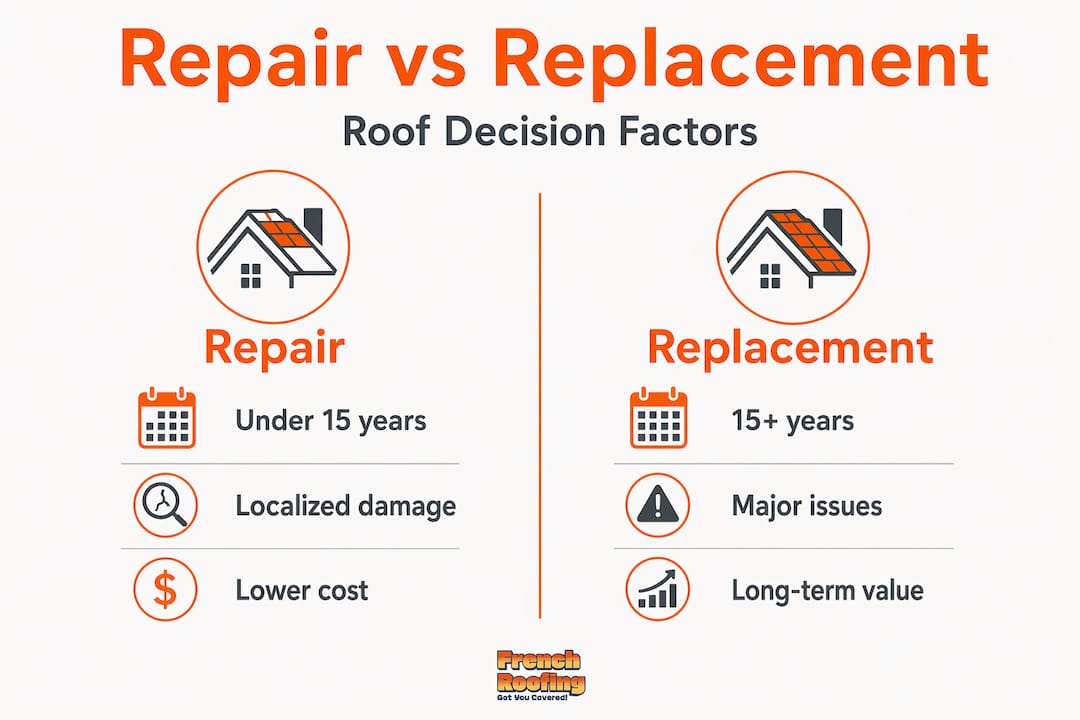
Roof age is your starting point. Most asphalt shingle roofs are designed to last 20 to 30 years under normal conditions. Roofs older than 15 years that show significant damage like missing shingles, mold, or granule loss are usually better candidates for replacement. By contrast, localized damage on roofs under 15 years old, such as a few missing shingles or a small leak, often qualifies for repair.
Damage extent gives you a percentage threshold to work with. If damage covers 30% or more of your roof surface, a full replacement is recommended over patching. Similarly, your repair history tells an important story. If your roof has needed multiple repairs in the past few years, those costs are stacking up against a replacement that would have solved the problem once and for all.
| Factor | Repair favored | Replacement favored |
|---|---|---|
| Roof age | Under 15 years | 15+ years with recurring issues |
| Damage area | Less than 30% of roof surface | 30% or more of roof surface |
| Repair cost vs replacement cost | Under 25% of replacement cost | Over 25% of replacement cost |
| Repair history | First or second incident | Multiple repairs in recent years |
| Deck condition | Sound and dry | Soft spots, rot, or moisture damage |
Pro Tip: Ask your contractor to give you the estimated replacement cost before they quote the repair. That number lets you apply the 25% rule immediately and make a data-driven decision on the spot.
How to assess your roof condition
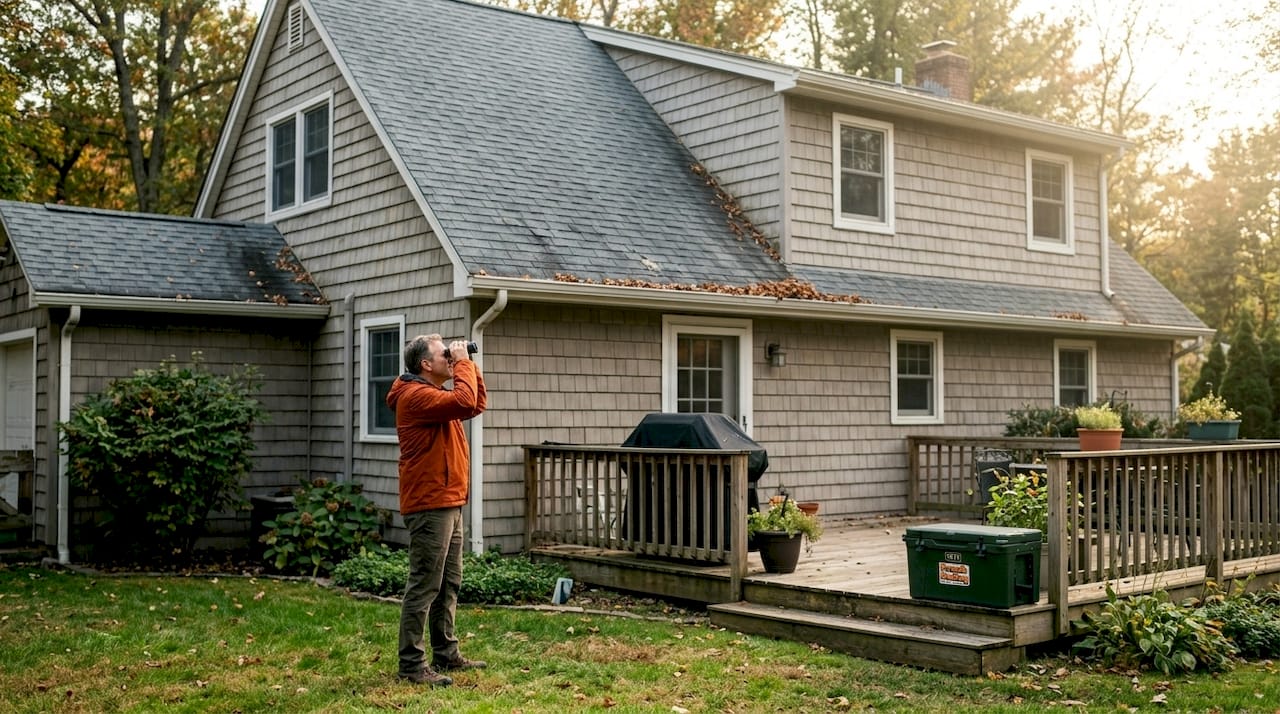
You do not need to be a professional to spot the early warning signs. A careful visual inspection from the ground and from inside your attic can tell you a great deal about what is going on up there before you call anyone.
Start from the attic. Look for daylight coming through the roof boards, dark staining, or sagging sections between the rafters. These are signs of moisture intrusion that no surface repair will permanently fix.
From the ground, here is what to look for:
- Curling or cupping shingles: Edges lifting or shingles curling inward signal age and weather fatigue
- Granule loss: Bare or patchy spots on shingles indicate the protective coating is wearing off
- Moss or mold growth: Green or black patches hold moisture and accelerate shingle decay
- Sagging roof deck: Any visible dip or wave in the roofline suggests structural issues below the surface
- Multiple active leaks: More than one unrelated leak points to widespread failure, not isolated damage
A qualified roofing technician can assess hidden defects that are impossible to spot from the ground, including deck rot, failed underlayment, and improper ventilation. Getting a professional inspection before you decide is not an added expense. It is the step that keeps you from choosing the wrong option and paying for it later.
| Inspection tool | Purpose |
|---|---|
| Binoculars | Safe ground-level shingle examination |
| Flashlight | Attic moisture and daylight checks |
| Moisture meter | Detect hidden water in roof decking |
| Camera or phone | Document damage for contractor review |
Pro Tip: Never walk your roof without proper footwear and safety equipment. Most homeowners get a better and safer result by calling a professional for the physical inspection and limiting their own check to the attic and ground views.
Cost comparison: repair vs replacement
The financial side of the how to decide on roof work question is where most homeowners get stuck. Repair costs feel manageable in the moment. Replacement feels like a large, avoidable expense. But the math often tells a different story.
Here is a practical example. If a full roof replacement costs $12,000 and a contractor quotes you $3,500 for repairs, that repair equals about 29% of the replacement cost. According to the 25% repair-cost guideline, you have crossed the threshold where replacement is the more cost-effective path. Add the possibility of another repair in 18 months, and the case for replacing becomes even stronger.
Repeated patch repairs often cost more over time than a single replacement, and they come with serious complications:
- Voided or reduced warranty coverage: Most shingle manufacturers will not honor warranties on roofs with extensive repair patchwork
- Insurance complications: Insurers may deny claims or reduce payouts on roofs with documented deferred maintenance
- Reduced resale value: Buyers and home inspectors will flag a roof with a long repair history as a liability
- Escalating hidden damage: Every month a failing roof stays in place, water continues to work its way into decking, insulation, and framing
A new roof typically offers better energy efficiency, improved warranties, and greater peace of mind. For homeowners concerned about the upfront cost, roofing financing options can spread that investment over time and make replacement financially accessible without draining savings. Knowing why repair costs vary by damage type also helps you evaluate whether the quote you received is fair.
Repair approaches vs replacement methods
Not all replacements are equal, and not all repairs are minor fixes. Understanding your options helps you have a much more productive conversation with your contractor.
Roof overlay (sometimes called a re-roof) involves installing a new layer of shingles directly over the existing ones. It is faster and less expensive upfront. However, overlay is only permitted when the roof has a single existing layer and the decking beneath is in sound condition. If your roof already has two layers, a full tear-off is required by code under IRC Section R908.3.
Full tear-off replacement removes all existing shingles and underlayment down to the decking. This allows a full inspection of the structure, repair of any deck damage, and installation of new underlayment. It takes longer and costs more, but it is the only method that qualifies for enhanced manufacturer warranties like the GAF Golden Pledge. Overlay installations frequently void those warranties.
| Method | Duration | Relative cost | Warranty eligibility | Lifespan |
|---|---|---|---|---|
| Spot repair | Hours to 1 day | Lowest | Limited or none | Varies |
| Roof overlay | 1 to 2 days | Moderate | Reduced or voided | 10 to 15 years |
| Full tear-off replacement | 1 to 3 days | Highest upfront | Full manufacturer warranty | 20 to 30+ years |
Repairs make sense when damage is truly localized, the roof is newer, and the deck shows no signs of compromise. Overlay can work as a transitional solution on qualifying roofs. Full tear-off is the right call when the roof has multiple layers, significant age, or deck damage that needs to be addressed.
- Choose repair when the issue is isolated and the roof has at least 5 to 10 years of life remaining
- Consider overlay when one layer exists, deck is solid, and budget is a real constraint
- Choose full tear-off when you want maximum lifespan, full warranty coverage, and a clean structural inspection
Signs it is time to replace, not repair
Some situations make the replacement decision straightforward. If you recognize multiple items on this list, you are past the point where repairs will serve you well.
- Your roof is 15 to 20 years old and has had two or more repairs in the past five years
- Sagging or mold growth is present anywhere on the roof deck or rafters
- You have active leaks in more than one unrelated location
- Damage covers 30% or more of the total roof surface
- Your attic shows daylight, heavy staining, or signs of long-term moisture exposure
- Repair quotes are coming in at more than 25% of the cost of a new roof
- You are planning to sell your home within the next few years and want full market value
If three or more of these apply to your roof, contact a licensed roofing contractor for a full inspection before investing more money in repairs. Acting before damage spreads to the decking, insulation, or interior framing saves you significantly more in the long run.
My take on this decision after years in the field
I have seen the repair-and-repeat cycle play out hundreds of times. A homeowner gets a leak, patches it, gets another leak two seasons later, patches that one too. By the time they finally call for a full assessment, they have spent $6,000 to $9,000 in repairs on a roof that still needs to be replaced. And now the decking has rot that adds $2,000 to the replacement cost.
The most common mistake I see is treating the roof as an isolated problem rather than a system. A shingle is just the surface layer. When shingles fail consistently, the underlayment, flashing, ventilation, and deck are usually involved too. A repair fixes the symptom. A replacement fixes the system.
My honest advice: if your roof is older than 15 years and you are calling for the second or third repair, get a full replacement estimate before authorizing another patch. The numbers usually make the decision easy once you see them side by side. And timely repairs on younger roofs genuinely do extend roof life, so I am not saying repairs are never worth it. They absolutely are. Just make sure you are repairing a roof that has meaningful life left in it.
The other thing I tell every homeowner: choose your contractor based on credentials and transparency, not the lowest bid. A licensed, certified contractor who gives you a clear written scope of work will save you far more than a low quote that leaves room for surprises.
— Sean
How French Roofing helps you make the right call
When you are weighing repair costs against replacement value, the clearest path forward starts with a professional inspection from someone you can trust.
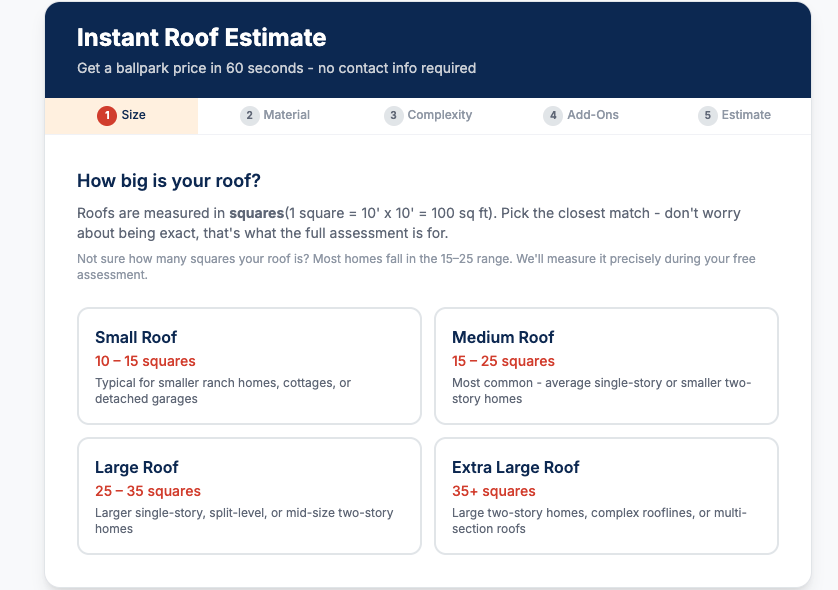
At French Roofing, we are licensed, CertainTeed Certified, and have been treating every home we work on like our own. Whether you need a targeted roof repair service to address isolated damage or a full roof replacement backed by manufacturer warranty, our team gives you an honest assessment with no pressure to go bigger than you need to. We also offer financing options so that the right long-term decision does not have to wait. Serving the Greater Portland Metro area, we make it easy to get a clear picture of your roof's condition and a reliable plan to protect your home.
FAQ
When should I repair my roof instead of replacing it?
Repair is the right choice when damage is localized, the roof is under 15 years old, and the repair cost is less than 25% of full replacement cost. A professional inspection confirms whether the underlying structure is still sound.
How do I know if roof repair is worth it?
Use the 25% rule: if the repair quote exceeds 25% of what a new roof would cost, replacement is generally the better financial decision. Repeated repairs on an aging roof almost always cost more in the long run.
What are the signs you need roof replacement?
Key signs include sagging deck sections, mold or moisture damage, multiple unrelated leaks, granule loss across large areas, and a roof age of 15 or more years with a documented repair history.
What is the difference between roof overlay and full tear-off?
A roof overlay installs new shingles over existing ones and is permitted only when one layer exists and the deck is solid. Full tear-off removes everything down to the deck, allows structural inspection, and qualifies for full manufacturer warranties. Overlays often void enhanced warranty coverage.
Does roof replacement increase home value?
Yes. A new roof improves resale value, strengthens buyer confidence during inspections, and typically comes with transferable warranties that make the home more attractive on the market.
Recommended
- Roof Replacement Financing Benefits For Homeowners | French Roofing Blog | French Roofing
- Roofing Financing Options For Homeowners 2026 Guide | French Roofing Blog | French Roofing
- Roof Replacement | Greater Portland Metro | French Roofing | French Roofing
- Roof Repair | Greater Portland Metro | French Roofing | French Roofing