

Roof replacement cost estimation is the process of calculating total project expenses across six core factors: roof size, material selection, labor, structural complexity, tear-off and decking repair, and permits. Average U.S. roof replacement costs reached $17,631 in 2025, a 33% increase over the prior four-year average. That number means a budget built on guesswork will almost certainly fall short. This roof replacement cost factors checklist walks you through every line item you need to understand before a contractor sets foot on your property.
1. Roof size and how it's measured
Roofing contractors measure surface area in squares, where one square equals 100 square feet of roof surface. A 2,000-square-foot home doesn't have a 2,000-square-foot roof. Pitch, overhangs, and geometry all push that number higher, sometimes significantly.
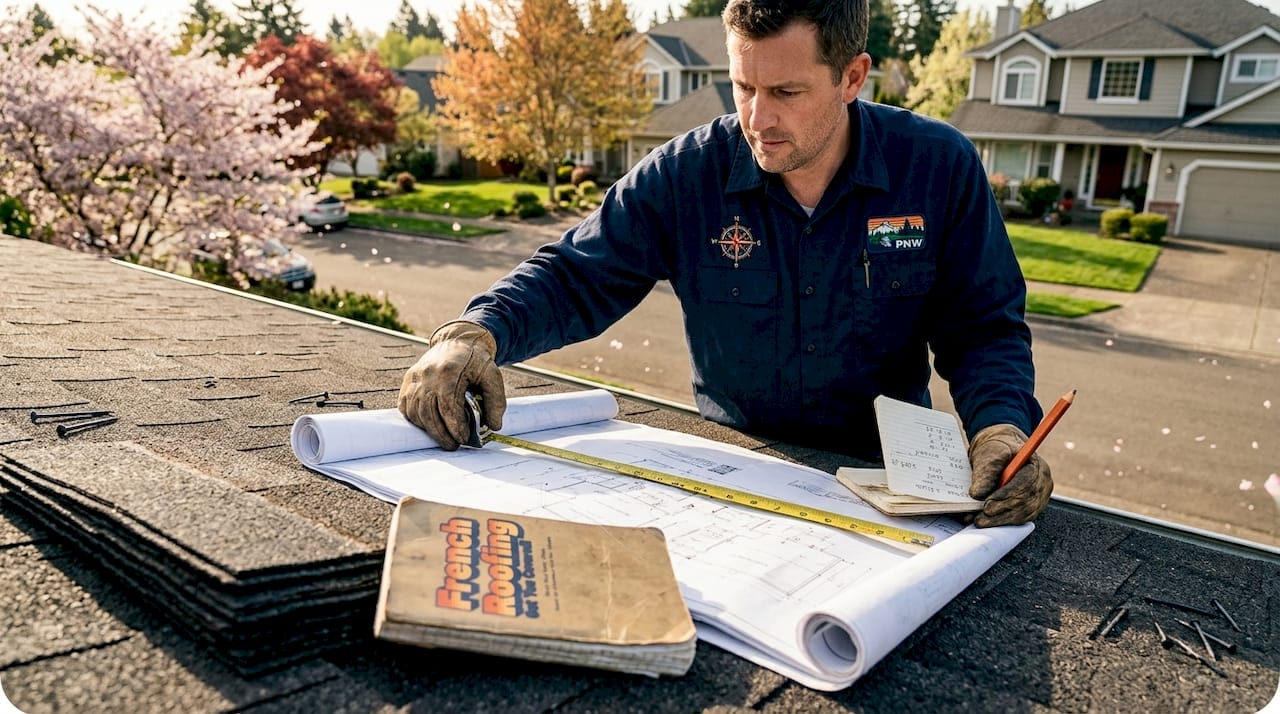
Waste factors are built into every professional estimate to account for cuts, overlaps, and valleys. Waste factors run 10% for simple gable roofs, 15% for hip roofs, and 15 to 20% for complex or cut-up designs. That means a complex roof on a 2,000-square-foot home might require materials for 2,400 square feet or more. Underestimating this figure leads to mid-project change orders, which cost more per unit than materials ordered upfront.
Common measurement pitfalls include:
- Measuring only the floor plan footprint and ignoring pitch multiplier
- Forgetting dormers, bump-outs, or attached garage rooflines
- Skipping the waste factor for valleys and hip returns
- Relying on satellite measurement tools without a physical verification
Pro Tip: Ask your contractor to show you the total measured square footage, the pitch multiplier used, and the waste percentage applied. If they can't explain those three numbers, that's a red flag worth noting on your roof replacement red flags checklist.
2. Material selection and component costs
Material choice is the single biggest variable in factors affecting roof pricing, and the range is wide. Architectural asphalt shingles (also called dimensional or laminate shingles) are the most common choice in the Portland metro area and across the Pacific Northwest. Three-tab asphalt sits at the lower end of the cost range, while metal, tile, and slate climb steeply from there.
| Material | Approx. cost per square | Typical lifespan |
|---|---|---|
| 3-tab asphalt | $80 to $100 | 15 to 20 years |
| Architectural asphalt | $100 to $150 | 25 to 30 years |
| Metal (standing seam) | $300 to $600 | 40 to 70 years |
| Concrete tile | $250 to $400 | 30 to 50 years |
| Natural slate | $600 to $1,500 | 75 to 100+ years |
Material costs don't stop at shingles. Every roof replacement also requires underlayment, ice and water shield, ridge cap, starter strips, drip edge, flashing, and ventilation components. These accessories can add $500 to $2,000 or more depending on the roof's size and the material system chosen. CertainTeed, for example, requires specific underlayment and accessory products to maintain their warranty coverage, which is worth knowing before you let a contractor substitute cheaper components.
Warranty terms deserve close attention here. Material warranties differ significantly from workmanship warranties, and a contractor who overlays a problematic substrate or goes out of business can void coverage entirely. Always ask for both warranties in writing before signing a contract.
Pro Tip: Regional material pricing varies. In the Portland metro area, supply chain conditions and seasonal demand can shift shingle prices noticeably between spring and fall. Get your estimate locked in writing, including material costs, before work begins.
3. Labor costs and what drives them up
Labor constitutes roughly 50 to 55% of total roof replacement cost, with materials making up the remaining 40 to 45%. That split means labor is where most of the price variation between contractors actually lives. A low bid often signals reduced labor quality, fewer crew members, or skipped safety steps rather than genuine savings.
Several factors push labor costs higher on any given project:
- Steep pitch: Roofs steeper than 6/12 require safety harnesses, specialized staging, and slower work pace.
- Multiple layers: Each additional layer of old shingles adds tear-off time and disposal weight.
- Architectural features: Dormers, hips, valleys, and skylights all require precise flashing and cutting work.
- Accessibility: Limited driveway access, landscaping obstacles, or second-story additions slow crew movement.
- Crew size and experience: Larger, experienced crews cost more per day but typically finish faster and with fewer callbacks.
Steep pitch roofs above 6/12 add a 15 to 25% premium to total labor costs, and complexity from dormers or multiple valleys can add another 15 to 55%. A straightforward gable roof on a ranch home and a cut-up hip roof on a two-story colonial can carry very different labor bills even if they share the same square footage.
4. Roof complexity and its real cost impact
Roof complexity is a separate line item from basic labor in a thorough cost checklist for roof repair or replacement. A simple gable roof with two planes is the least expensive to work on. Every additional plane, angle change, or penetration adds time, material waste, and skill requirements.
The features that add the most cost include valleys (where two roof planes meet), hip returns, dormers with their own mini-rooflines, chimneys requiring step flashing and counter-flashing, skylights, and pipe boots. Each of these requires precise measurement, custom cutting, and careful waterproofing. A missed valley or improperly flashed chimney is one of the most common sources of post-installation leaks, so cutting corners here creates expensive problems later.
Complexity also affects how long the job takes. A complex roof that takes three days instead of one day adds two days of labor cost, equipment rental, and potential weather exposure risk. A complete roofing estimate checklist should itemize pitch, layers to remove, flashing scope, and decking repair potential so you can see exactly what you're paying for before work starts.
5. Tear-off and decking repair as hidden budget risks
Old roof removal is rarely as simple as it looks from the ground. Tear-off labor and disposal fees are standard line items, but what gets discovered underneath is where budgets can shift fast. This is the section of your cost checklist for roof repair that most homeowners underestimate.
Here's a realistic sequence of events on a tear-off project:
- Crew removes old shingles and underlayment down to the decking.
- Inspector or crew lead walks the decking to check for soft spots, rot, or delamination.
- Damaged sheets are marked and measured.
- Homeowner is notified and asked to approve repair pricing before work continues.
- Replacement sheets are installed and inspected before new underlayment goes down.
Decking rot or damage appears in 15 to 20% of tear-off projects, costing $50 to $100 per sheet for spot repairs and $3,000 to $5,000 for full redecking. That's a meaningful swing in a project budget. Post-tear-off discoveries like decking rot and flashing damage are the primary causes of budget surprises, which is exactly why written change order approval protocols matter.
Pro Tip: Build a 10 to 15% contingency into your roofing budget specifically for decking repairs. If you don't need it, great. If you do, you won't be scrambling for cash mid-project. Ask your contractor upfront what their unit price is for decking replacement so there are no surprises on the invoice.
6. Permits, fees, and insurance recovery
Permits are a non-negotiable part of a legal roof replacement in most jurisdictions, including Oregon. Typical permit fees range from $100 to $300 depending on the jurisdiction and project scope, though some cities add plan review fees or require a separate inspection fee on top of the base permit cost.
Key items to verify with your contractor on permits and fees:
- Who pulls the permit (it should always be the licensed contractor, not the homeowner)
- Whether the permit fee is included in the estimate or billed separately
- If a final inspection is required and who schedules it
- Whether your municipality requires a permit for a full tear-off and re-roof versus a simple overlay
Insurance adds another layer to your budget planning. If your replacement is insurance-related, recoverable depreciation requires completing repairs within deadlines and submitting documentation to reclaim withheld funds. Missing that deadline means leaving money on the table. Ask your insurance adjuster for the recoverable depreciation amount and the submission deadline before you sign a roofing contract.
Key takeaways
Accurate roofing cost estimation requires accounting for roof size, materials, labor, complexity, decking condition, and permits before a single shingle is ordered.
| Point | Details |
|---|---|
| Measure accurately | Use pitch-adjusted square footage with waste factors of 10 to 20% depending on roof shape. |
| Labor is the largest cost | Labor runs 50 to 55% of total cost; complexity and steep pitch add 15 to 55% more. |
| Budget for decking repairs | 15 to 20% of projects uncover rot; set aside a 10 to 15% contingency fund. |
| Verify permits upfront | Permit fees of $100 to $300 are standard; confirm who pulls the permit and what inspections are required. |
| Get itemized estimates | A detailed written estimate prevents disputes and protects you from post-tear-off cost surprises. |
What I've learned after years of roofing estimates
I've sat across the table from a lot of homeowners who got a quote that seemed great until the job was halfway done and the number had jumped by $2,000. Nine times out of ten, the problem wasn't the decking repair or the permit fee. It was that the original estimate was vague on purpose.
A contractor who won't show you line items for materials, labor, tear-off, disposal, and decking contingency isn't protecting you. They're protecting themselves. When you use a roof contractor questions checklist before hiring, you filter out the contractors who rely on ambiguity to pad invoices after the fact.
The other thing I'd tell you is this: the lowest bid is almost never the best deal. If one estimate is 30% below the others, something is being left out. Either the labor rate is unsustainable, the materials are being substituted, or the scope is incomplete. I've seen all three. Get three written estimates, compare them line by line, and pay attention to what's missing as much as what's included.
French Roofing makes roof replacement straightforward
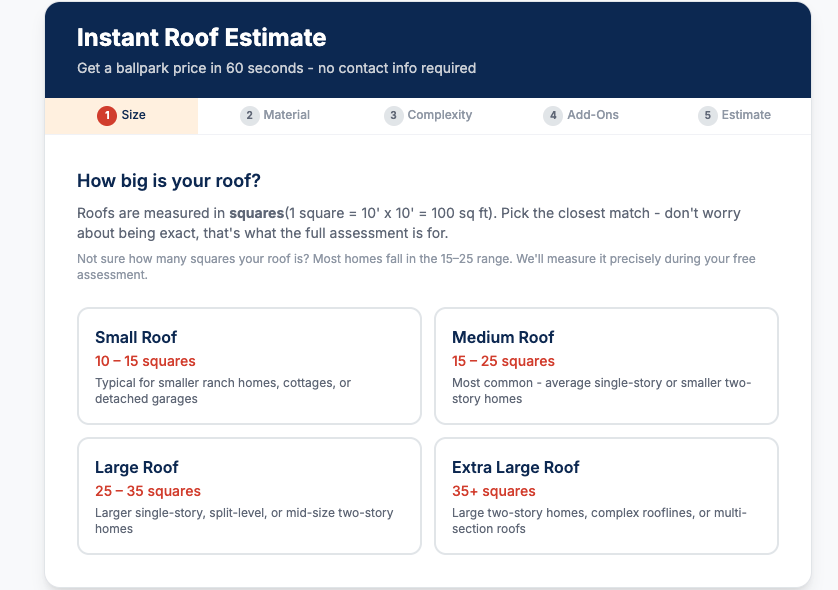
French Roofing is a family-owned, CertainTeed Certified contractor based in Damascus, OR (CCB #203933), serving the greater Portland metro including Clackamas and Happy Valley. We provide free roof inspections and detailed written estimates that break down every cost factor on this checklist, so you know exactly what you're paying for before work begins. Our roof replacement services include licensed, insured, and bonded workmanship with no vague line items. If budget timing is a concern, financing options are available to help you move forward without waiting.
Get Instant Estimate Online!
FAQ
What is the average cost of a roof replacement in 2025?
The average U.S. residential roof replacement cost reached $17,631 in 2025, a 33% increase over the prior four-year average. Your actual cost depends on roof size, material choice, and local labor rates.
How do I estimate the number of squares on my roof?
Divide your total roof surface area (not floor plan) by 100 to get squares, then add a waste factor of 10% for simple gable roofs, 15% for hip roofs, and up to 20% for complex designs.
Why does roof pitch affect replacement cost?
Steep roofs above a 6/12 pitch require safety harnesses, slower work pace, and specialized staging, adding a 15 to 25% premium to labor costs compared to low-slope roofs.
Should I budget extra for decking repairs?
Yes. Decking damage shows up in roughly 15 to 20% of tear-off projects, with spot repairs running $50 to $100 per sheet and full redecking costing $3,000 to $5,000. A 10 to 15% contingency is a reasonable buffer.
Do I need a permit for a roof replacement in Oregon?
Most Oregon jurisdictions require a permit for a full tear-off and re-roof. Permit fees typically range from $100 to $300, and your licensed contractor should pull the permit on your behalf.
Recommended
- Roofing Financing Options For Homeowners 2026 Guide | French Roofing Blog | French Roofing
- Roof Contractor Questions Checklist: Hire Right in 2026
- Roof Replacement Financing Benefits For Homeowners | French Roofing Blog | French Roofing
- Instant Roof Estimate | Free Online Calculator | French Roofing