

A partial roof replacement is the process of removing and installing new roofing materials over a specific damaged section of your roof rather than tearing off and replacing the entire surface. The industry also calls this a sectional roof replacement, and it's a legitimate option when damage is genuinely localized. Unlike a simple patch repair that swaps out a few shingles, a partial replacement addresses an entire damaged area, including the underlayment and sometimes the decking beneath it. Common materials involved include asphalt shingles and metal roofing panels. This guide covers when it makes sense, what it costs, how the process works, and where the real risks hide.
What is a partial roof replacement and when does it apply?
A partial roof replacement makes the most sense when damage is contained to one area of your roof and the rest of the structure is in solid condition. Think of a situation where a windstorm lifts shingles off the back slope of your house, but the front and sides are perfectly fine. Replacing the whole roof in that scenario would be like buying a new car because one door got dented.
The conditions that make a partial replacement a practical choice include:
- Isolated storm damage such as wind-lifted shingles or hail impact limited to one slope
- A localized leak traced to a specific section, flashing failure, or valley problem
- Roof age under 15 years with the undamaged sections still performing well
- Material availability that allows new shingles to closely match the existing color and profile
- Insurance claims where the adjuster approves coverage for a specific damaged area only
The condition of your existing roof matters a lot here. If your roof is 22 years old and showing signs of widespread wear like granule loss in gutters, multiple soft spots, or sagging sections, a partial replacement is likely a short-term fix that delays a bigger bill. The damage needs to be genuinely isolated, not just the most visible symptom of a roof that's failing across the board.
Pro Tip: Before committing to a partial replacement, ask your roofer to walk the entire roof and document the condition of every slope. You want to know whether you're fixing a problem or just postponing one.
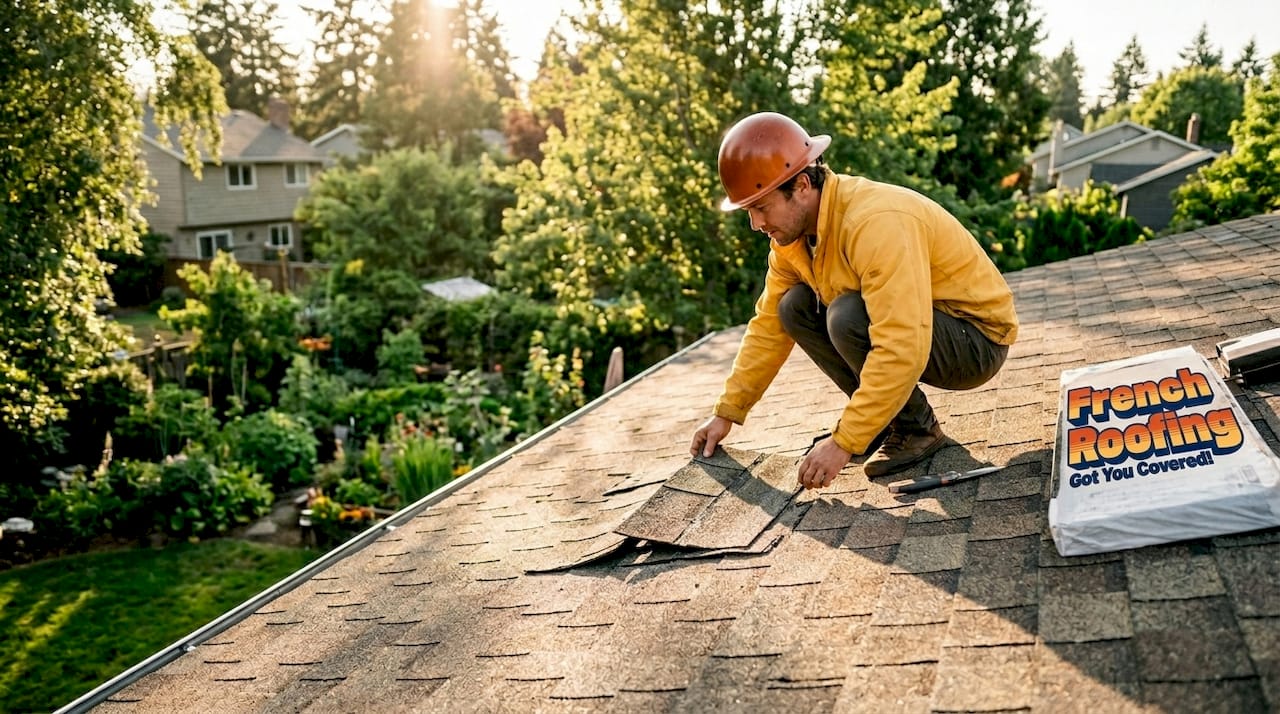
One less obvious case where partial replacement makes real sense: replacing the roof section beneath solar panels at the time of panel installation. Replacing sections under solar panels before they go up saves you the significant cost of removing and reinstalling the panels later when the roof eventually needs work.
Partial vs full roof replacement: what's the real difference?
The comparison between partial and full replacement comes down to four factors: upfront cost, long-term cost, warranty coverage, and appearance. Here's how they stack up honestly.
| Factor | Partial replacement | Full replacement |
|---|---|---|
| Upfront cost | Lower ($900 to $2,000+ for larger sections) | Higher ($8,400 to $15,000 for 2,000 sq ft asphalt) |
| Warranty coverage | Often limited or unavailable | Full manufacturer and workmanship warranty |
| Aesthetic match | Risk of visible color/texture mismatch | Uniform appearance across entire roof |
| Long-term risk | Seams and transitions can fail over time | Lower risk when done correctly |
| Best for | Isolated damage, newer roof, budget constraints | Aging roof, widespread damage, selling a home |
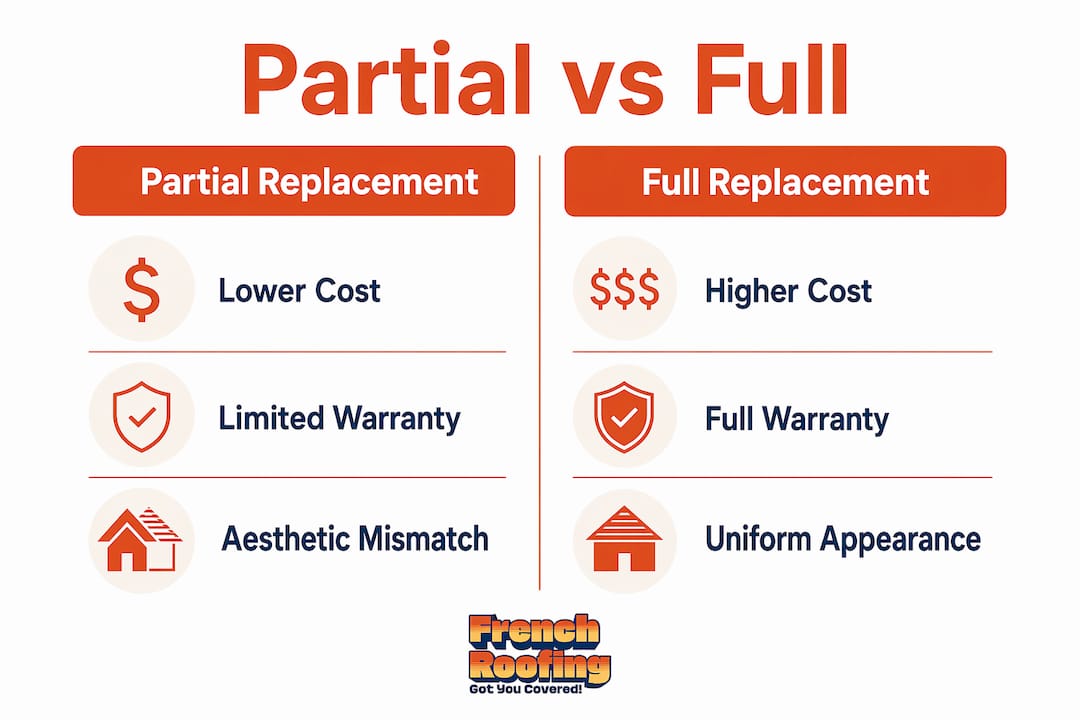
The full replacement cost range of $8,400 to $15,000 for a standard 2,000 square foot home reflects 2026 pricing for asphalt shingles. That's a real number, and it's understandable why homeowners look for ways to avoid it. But the warranty issue with partial replacements is something most homeowners don't find out about until it's too late.
Many roofers won't warranty partial work if the replacement ends mid-slope or near a valley. The reason is straightforward: water management on a roof depends on the entire slope working together. When new and old materials meet at a seam that isn't at a ridge or edge, that transition point becomes a vulnerability. A reputable contractor will tell you this upfront. One who doesn't mention it is worth questioning.
The aesthetic mismatch is real too. Asphalt shingles fade over time, and manufacturers update their color batches regularly. Even buying the same product line from CertainTeed or GAF won't guarantee a perfect visual match to shingles that have been on your roof for five years. On a back slope that nobody sees, this is a non-issue. On your street-facing front slope, it can look noticeably patchy.
Pro Tip: If you're planning to sell your home within two to three years, talk to a real estate agent before choosing partial over full replacement. A mismatched roof can raise red flags during a buyer's inspection.
How does a partial roof replacement actually get done?
The process follows a clear sequence, and understanding it helps you know what to expect and what to ask your contractor about. Here's how a proper partial replacement goes from start to finish.
-
Inspection and damage assessment. A qualified roofer walks the affected area and the surrounding sections to define the true scope of damage. This includes checking the decking beneath the shingles for rot or soft spots.
-
Marking the replacement boundary. The replacement area gets defined at a logical stopping point, ideally at a ridge, hip, or rake edge rather than mid-slope. This reduces the risk of a problematic seam.
-
Removing damaged materials. The roofer strips off the old shingles, the underlayment, and any damaged decking in the affected section. This is where hidden problems like rotted sheathing often get discovered.
-
Fixing root causes. If a flashing failure, poor ventilation, or a compromised valley caused the damage in the first place, those issues get addressed before new materials go down. Skipping this step means the new section fails for the same reason the old one did.
-
Installing new underlayment and shingles. New synthetic or felt underlayment goes down first, followed by the new shingles. Proper sealing and blending with the existing roof is critical at every transition point to prevent water infiltration.
-
Final inspection and cleanup. A good contractor walks the finished work, checks all flashing and seals, and clears the site of debris and old materials.
The timeline for a partial replacement on a single slope is typically one day for a crew of two to three people. Larger sections or complicated roof geometry with multiple valleys and penetrations can extend that to two days. Weather in the Portland area adds a variable, since you don't want new shingles going down in active rain.
What does a partial roof replacement cost?
Cost for a partial replacement depends on the size of the damaged area, the roofing material, the pitch of your roof, and your region. Small repairs run $300 to $900, while larger sectional replacements covering a full slope or multiple squares typically land between $900 and $2,000 or more.
Roofing contractors price work in squares, where one square equals 100 square feet of roof surface. The cost per square includes material, labor, tear-off, and disposal. Factors that push the price up include:
- Steep pitch that requires additional safety equipment and slower work pace
- Multiple layers of old roofing that need to be torn off before new material goes down
- Decking replacement if the sheathing beneath the shingles is rotted or damaged
- Flashing work around chimneys, skylights, or vents within the replacement area
- Material premium if you're using architectural shingles, metal, or a specialty product
Roofing costs are strongly influenced by pitch, complexity, and regional labor availability, often more than the actual square footage. A steep, complex roof in the Portland metro will cost more per square than a simple low-slope ranch in a rural area.
Insurance coverage is worth understanding before you get quotes. Insurance may cover partial replacement when storm damage is clearly localized, but your policy's terms and your adjuster's assessment determine what gets approved. Some insurers push for partial work to limit their payout. Others require full replacement when damage exceeds a certain percentage of the roof. Read your policy and ask your adjuster to explain the reasoning in writing.
Getting multiple roofing quotes is the single best way to avoid overpaying or getting underbid by a contractor who plans to cut corners. Three quotes from licensed, insured contractors gives you a realistic range and a basis for comparison. Check out this contractor questions checklist before you start calling around. It'll save you time and help you ask the right things.
If cost is the main barrier to a full replacement when one is really warranted, financing options are worth exploring before you default to a partial fix that may cost more in the long run.
Key takeaways
A partial roof replacement is the right call only when damage is genuinely isolated, the rest of the roof is in good shape, and matching materials are available. Otherwise, it delays a larger expense while adding warranty and aesthetic risk.
| Point | Details |
|---|---|
| Definition is specific | A partial replacement removes and replaces an entire damaged section, not just a few shingles. |
| Roof age matters | Roofs under 15 years old with isolated damage are the best candidates for partial replacement. |
| Warranty risk is real | Many roofers won't warranty partial work that ends mid-slope or near valleys. |
| Cost range is wide | Partial replacements run from $900 to $2,000+ depending on size, pitch, and materials. |
| Full replacement has advantages | Full replacement costs more upfront but eliminates matching, warranty, and seam problems. |
Why I'm cautious about partial replacements (and when I recommend them anyway)
I've been doing this since 2014, and I'll be straight with you: partial replacements are one of the most misused options in residential roofing. Not because they're a bad idea in the right situation, but because homeowners and sometimes contractors use them to avoid a harder conversation about a roof that really needs to be replaced.
The cases where I genuinely recommend a partial replacement are pretty specific. You've got a newer roof, maybe eight to twelve years old, and a storm takes out one slope. The rest of the roof is solid, the materials are still available in a close match, and the repair boundary lands cleanly at a ridge. That's a legitimate partial replacement. We do those, and they hold up well.
Where I see regret is when someone patches a 20-year-old roof because the full replacement quote scared them. Two years later, a different section fails, and now they've spent money twice. Professional evaluation before committing to either path is not optional. It's the only way to know whether you're making a smart short-term decision or just delaying the inevitable.
The warranty issue is something I always bring up with homeowners. Being CertainTeed Certified means we can offer manufacturer-backed warranties on full replacements. On partial work, that coverage gets complicated fast. I'd rather tell you that upfront than have you find out when you file a claim.
My honest advice: use the repair vs replacement guide to think through your situation before you call anyone. Come to the conversation knowing what questions to ask. A contractor who gets annoyed by informed homeowners is a contractor worth avoiding.
— Sean
French Roofing can help you figure out the right call
If you're weighing a partial replacement against a full one and you're not sure which direction makes sense, French Roofing is here to help you think it through. We're a family-owned, licensed, insured, and bonded roofing contractor (CCB #203933) serving Damascus, Clackamas, Happy Valley, and the greater Portland metro.
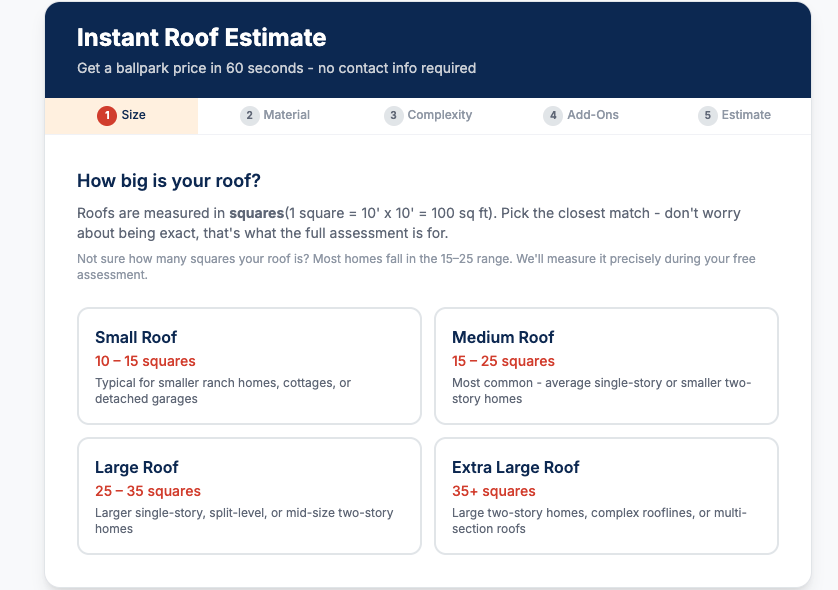
As a CertainTeed Certified contractor, we handle both partial and full roof replacements and give you a straight answer about which one your roof actually needs. We also offer roof repair services for situations that don't require a full section replacement. Financing is available if cost is a factor in your decision. No pressure, no runaround. Just an honest assessment and a clear estimate.
Get Instant Estimate Online!
FAQ
What does partial roof replacement mean?
A partial roof replacement means removing and replacing a defined damaged section of your roof rather than the entire surface. It covers the shingles, underlayment, and sometimes the decking in the affected area.
How much does a partial roof replacement cost?
Small partial repairs run $300 to $900, while larger sectional replacements typically cost $900 to $2,000 or more depending on the size, pitch, materials, and whether decking replacement is needed.
Does insurance cover a partial roof replacement?
Insurance may cover a partial replacement when storm damage is clearly isolated to one section of the roof. Your adjuster's assessment and your policy terms determine what gets approved, so always get the reasoning in writing.
What are the risks of a partial roof replacement?
The main risks are warranty limitations, since many roofers won't warranty work that ends mid-slope, and aesthetic mismatch where new shingles don't visually blend with weathered existing ones. Seam transitions can also become leak points over time if not properly sealed.
When should you choose full replacement over partial?
Choose full replacement when your roof is 20 years or older, when damage appears in multiple areas, when granule loss or sagging is widespread, or when you're planning to sell your home and need a uniform, warranted roof.
Recommended
- Roof Replacement Financing Benefits For Homeowners | French Roofing Blog | French Roofing
- Roofing Financing Options For Homeowners 2026 Guide | French Roofing Blog | French Roofing
- Roof Replacement | Greater Portland Metro | French Roofing | French Roofing
- Roof Repair vs Replacement Decision Guide for Homeowners