
Roof cleaning prevents premature material deterioration by removing moisture-trapping debris, moss, and algae before they cause structural damage and costly repairs. Most homeowners think a dirty roof is just an eyesore, but what does roof cleaning prevent goes well beyond appearances. Biological growth and organic buildup actively degrade shingles, block drainage, and compromise the waterproofing your roof depends on. Left unchecked, these conditions shorten roof life by years and can void your manufacturer warranty. The good news is that regular, properly executed cleaning stops this cycle before it starts.
What does roof cleaning prevent when it comes to debris and biological growth?
The short answer: roof cleaning prevents the kind of slow, invisible damage that only shows up on your repair bill. Debris and moisture buildup trap water against roofing materials and block the drainage your roof was designed to rely on. That persistent dampness is what accelerates wear on shingles, seams, and flashings long before any visible leak appears.
Here's exactly what's happening up there when your roof goes uncleaned:
- Leaves and organic debris collect in valleys and around flashings, creating damp pockets that stay wet for days after rain. That sustained moisture softens roofing materials and speeds up aging at the cellular level.
- Algae (Gloeocapsa magma) is the organism behind those dark black streaks you see on roofs across the Portland metro. It feeds on the limestone filler in asphalt shingles, breaking down the material from the surface inward.
- Moss is worse than algae because it physically lifts shingle edges as it grows. Once the edges curl, water gets underneath during rain, and you've got a moisture pathway straight to your decking.
- Blocked gutters and drains caused by debris lead to ponding water on flat or low-slope sections. Standing water increases moisture exposure and stresses seams and membranes in ways that compound over time.
- Organic growth spreads. A small moss patch in one corner doesn't stay small. Spores travel, and within a season or two, you can have coverage across a significant portion of your roof.
Moss and algae left untreated cause premature material wear by holding excess moisture, leading to leaks and expensive interior damage. That means water stains on ceilings, damaged insulation, and potential mold growth inside your attic. Cleaning your roof removes these threats before they reach that stage.
Why improper cleaning can cause worse damage than no cleaning at all
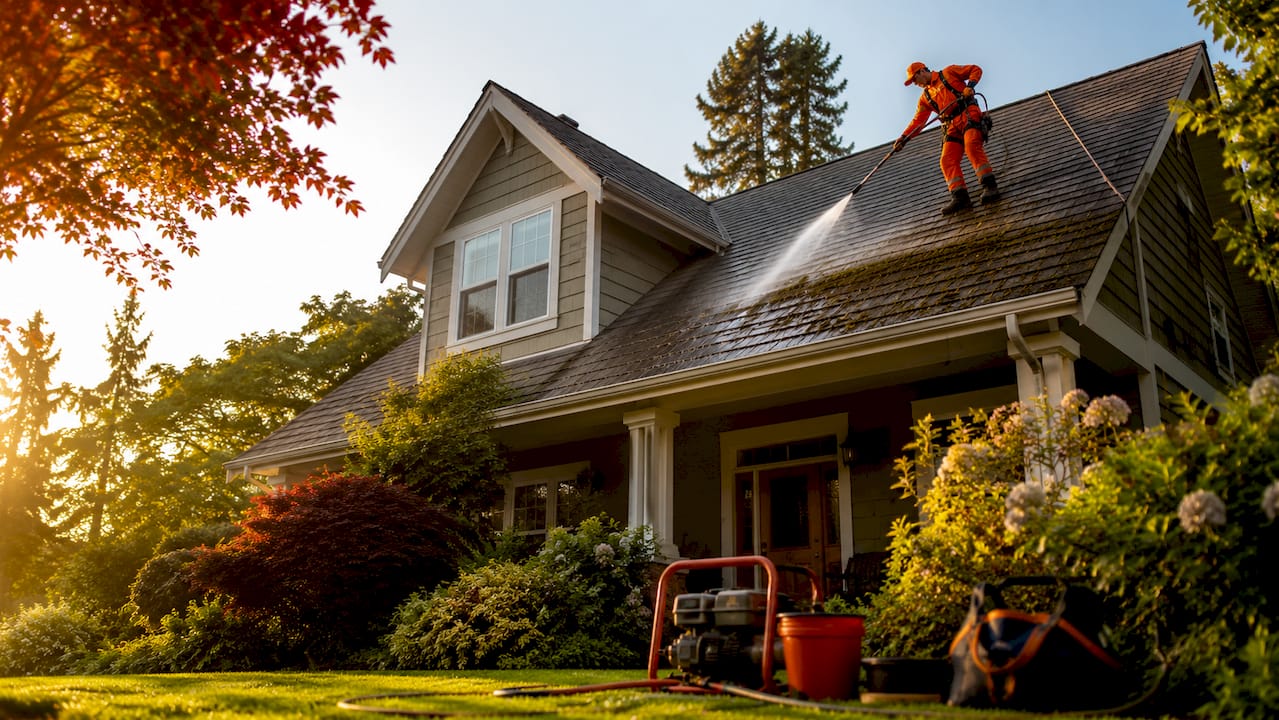
This is where a lot of homeowners get burned, sometimes literally. Grabbing a pressure washer and blasting your roof clean feels satisfying, but pressure washing removes protective granules on asphalt shingles, cutting years off roof life and voiding manufacturer warranties. Those granules aren't decorative. They provide UV protection and are the primary defense against heat degradation.
The warranty issue is serious. Insurance claims may be denied or reversed if pressure washing is detected during an inspection. Your insurer or manufacturer doesn't have to take your word for it. Granule loss shows up clearly during a professional inspection, and once they see it, your coverage for related damage can disappear.
There's also the problem of faster re-growth. High-pressure washing blasts visible grime off the surface but doesn't kill the biological organisms causing it. Algae and moss roots remain embedded in the shingle material. Within months, you're looking at the same problem again, often worse because the shingles are now more porous from the mechanical damage.
Pro Tip: If a contractor shows up with a standard pressure washer and no chemical treatment, send them home. The right method for asphalt shingles, tile, and wood shakes is soft washing, not pressure washing. Check the cleaning methods comparison before you hire anyone.
DIY risks go beyond equipment choice. Working on a wet, sloped roof without proper safety gear is genuinely dangerous. And if you apply the wrong chemical concentration or miss proper rinsing, you can damage landscaping, stain siding, or accelerate shingle degradation. The risks of dirty roofs are real, but the risks of improper cleaning are just as real.
How does professional soft washing extend roof life?
Soft washing is the industry-standard method for residential roof cleaning, recommended by CertainTeed, GAF, and most major shingle manufacturers. Here's how it works and why it's the right call for preventing roof damage:
- Pre-treatment inspection. A licensed technician checks for missing shingles, cracked tiles, or open seams before applying any solution. Soft washing is contraindicated for roofs with active structural failure because chemical penetration through open seams can worsen moisture pathways. You need to know what you're working with first.
- Low-pressure application of sodium hypochlorite solution. The solution is applied at low pressure, typically well under 100 PSI, compared to the 1,500 to 3,000 PSI of a standard pressure washer. The diluted sodium hypochlorite targets algae, moss, lichen, and mold at the biological level.
- Dwell time. This is the step most DIYers skip and the reason soft washing actually works. Dwell time of 15 to 20 minutes allows the solution to kill algae at the cellular level, not just rinse off surface discoloration. Without dwell time, you're treating symptoms, not the cause.
- Low-pressure rinse. After dwell time, the roof is rinsed at low pressure to remove dead organisms and residue without disturbing granules or lifting shingle edges.
- Post-clean biocide or preventive treatment. Many professionals apply a follow-up treatment or recommend zinc or copper strips near the ridge. Zinc and copper strips help prevent algae re-growth, extending intervals between cleanings from the typical 12 to 18 months up to 2 to 5 years.
Soft washing kills biological growth chemically rather than mechanically, protecting roofing substrates and warranties. That distinction matters because it's the difference between a roof that lasts its full rated lifespan and one that needs replacement five to ten years early.
Signs you need roof cleaning and practical maintenance tips
Knowing when to clean is half the battle. These are the warning signs that tell you it's time to call a professional:
- Black streaks running down shingles. This is Gloeocapsa magma algae, and it spreads. Permanent shingle discoloration and black streaks are among the clearest visual indicators that biological growth is active on your roof.
- Green or gray moss patches. Especially common on north-facing slopes and areas shaded by trees. Moss that's thick enough to see from the ground has already been lifting shingle edges.
- Granules in your gutters. If you're finding significant granule accumulation in your gutters after rain, your shingles are degrading. Cleaning won't reverse that, but it will stop biological growth from accelerating it further.
- Dirt and debris buildup in valleys. Valleys are where water concentrates. Debris sitting in valleys is actively blocking drainage and holding moisture against the most stress-prone areas of your roof.
Pro Tip: Combine your roof cleaning with a professional inspection. Regular cleaning paired with inspection makes damage easier to detect and repair before it becomes an emergency. At French Roofing, we check for damaged flashings, lifted shingles, and early signs of wear every time we're on a roof.
Beyond cleaning, a few maintenance habits make a real difference. Trim tree branches that hang over your roof. Overhanging branches deposit debris constantly and create the shade that algae and moss need to thrive. Keep gutters clear so water drains properly after every rain. And schedule a professional cleaning every one to three years depending on your tree coverage and local climate. In the Portland metro, where we get significant rainfall and plenty of shade, the shorter end of that range is the smarter call.
Key takeaways
Roof cleaning prevents premature deterioration, protects warranties, and stops moisture damage before it reaches your decking, insulation, and interior.
| Point | Details |
|---|---|
| Moisture is the core threat | Debris and biological growth trap moisture against shingles, accelerating wear and leaks over time. |
| Pressure washing causes damage | High-pressure washing strips granules, voids warranties, and can trigger insurance claim denials. |
| Soft washing kills growth at the root | Sodium hypochlorite with proper dwell time eliminates algae and moss without damaging roofing materials. |
| Warning signs are visible | Black streaks, moss patches, and granules in gutters all indicate cleaning is overdue. |
| Prevention extends roof life significantly | Post-clean biocide treatments and zinc strips can extend re-growth intervals from months to years. |
Why I think most homeowners underestimate roof cleaning
I've been doing this since 2014, and the call I get most often goes something like this: "Sean, I've got some black stuff on my roof. Is that a big deal?" Nine times out of ten, by the time someone calls about the black streaks, the moss has already been there for a couple of seasons doing quiet damage.
Roof cleaning gets treated as cosmetic maintenance, like washing your car. It's not. It's preventive maintenance, like changing your oil. Skip it long enough and you're not just dealing with a dirty roof. You're dealing with granule loss, compromised shingles, and potentially a roof replacement that was five years premature. I've seen homeowners spend $12,000 to $18,000 on a new roof that could have been avoided with a few hundred dollars in cleaning every couple of years.
The other thing I'd push back on is the pressure washer temptation. I get it. You've got one in the garage, the roof looks dirty, and it seems like a quick fix. But pressure washing asphalt shingles is one of the fastest ways to void your warranty and accelerate aging. I've inspected roofs where a well-meaning homeowner pressure washed them and took five years off the life of a perfectly good roof in an afternoon. Soft washing isn't just a preference. It's the method that actually works without creating new problems.
If you're in Damascus, Clackamas, Happy Valley, or anywhere in the greater Portland metro, get on a regular cleaning schedule. Your roof will thank you, and so will your wallet.
— Sean
How French Roofing protects your roof with professional cleaning
French Roofing offers licensed, insured soft washing services for homeowners across Damascus, Clackamas, Happy Valley, and the greater Portland metro. Every cleaning includes a roof inspection so you know exactly what condition your roof is in before and after. We're CertainTeed Certified (CCB #203933), which means our methods protect your warranty, not void it.
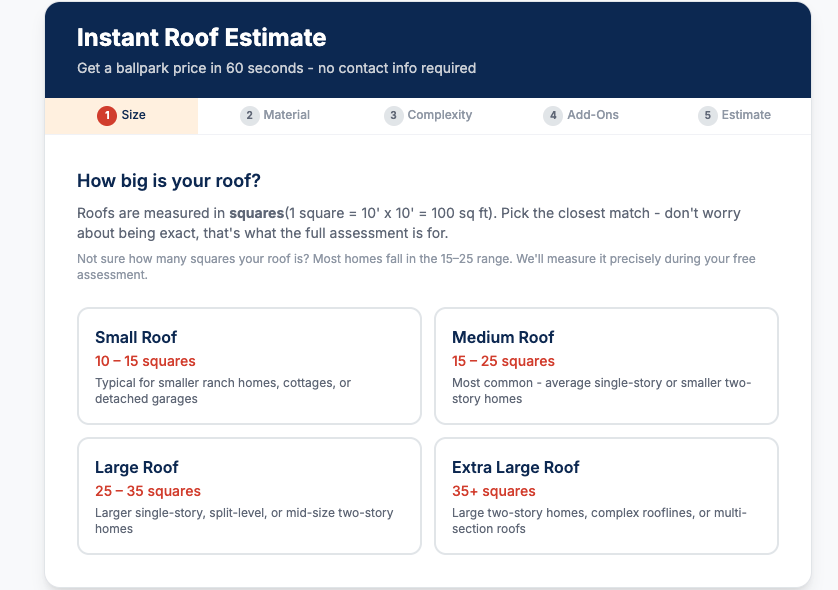
If cleaning reveals damage that needs attention, our roof repair services are right there to address it before small issues turn into large ones. We also offer financing options for homeowners who want to get ahead of maintenance without stretching the budget. Keeping your roof clean is one of the best investments you can make in your home's long-term value.
Get Instant Estimate Online!
FAQ
What does roof cleaning prevent most commonly?
Roof cleaning primarily prevents premature shingle deterioration, moisture-related leaks, and blocked drainage caused by moss, algae, and debris buildup. Left untreated, these conditions accelerate wear and can lead to costly interior water damage.
How often should you clean your roof?
Most residential roofs benefit from cleaning every one to three years, depending on tree coverage, shade, and local climate. In high-rainfall areas like the Portland metro, cleaning every one to two years is the more protective schedule.
Does roof cleaning void your warranty?
Improper cleaning, specifically pressure washing, can void manufacturer warranties and lead to denied insurance claims. Soft washing using approved chemical methods preserves your warranty coverage.
Can you clean a roof yourself?
DIY roof cleaning carries real risks including personal injury, shingle damage from incorrect pressure, and chemical misapplication. Hiring a licensed professional with soft washing experience is the safer and more effective choice.
What are the signs that a roof needs cleaning?
Black streaks from algae, visible moss patches, granules accumulating in gutters, and debris buildup in roof valleys are all clear signs that cleaning is overdue and biological growth is actively degrading your shingles.