
A roof contractor questions checklist is the single most effective tool a homeowner can use to separate qualified professionals from contractors who will cost you far more than their bid suggests. Before you sign anything or hand over a deposit, you need direct answers on licensing, insurance, permits, warranties, materials, and payment terms. This article gives you a structured roofing contractor interview guide covering every category that matters, written from the perspective of someone who has seen what happens when homeowners skip these questions. Use it as your roof contractor evaluation checklist from the first phone call through final cleanup.
1. Verify licensing and insurance before anything else
Licensing and insurance are the two non-negotiable items on any checklist for roof repairs or replacements. A contractor license is not the same as a business license, and confusing the two is one of the most common mistakes homeowners make. In Oregon, French Roofing carries CCB license #203933, which is the state-issued contractor license that covers residential work. Ask every contractor for their CCB number (or the equivalent in your state) and verify it directly with the licensing board.
Insurance is equally specific. You need two separate certificates: general liability and workers' compensation. General liability covers damage to your property if something goes wrong. Workers' comp covers the crew if someone gets hurt on your roof. If a contractor cannot produce both certificates on request, stop the conversation there.
Ask these questions directly:
- "Can you provide your contractor license number so I can verify it?"
- "Do you carry general liability insurance? What is the coverage limit?"
- "Do you carry workers' compensation for all workers on my job?"
- "Do your subcontractors carry their own insurance, or are they covered under yours?"
That last question matters more than most homeowners realize. Crew composition and insurance for subcontractors is a common gap. If a subcontractor gets hurt on your property and is not covered, you could be liable.
Pro Tip: Request certificates of insurance (COIs) sent directly from the contractor's insurance provider, not a copy the contractor hands you. COIs can be outdated or altered.
2. Ask who pulls the permits and what that costs
Permits are not optional, and skipping them can affect your ability to make insurance claims and will complicate any future home sale. A qualified contractor pulls the permit before work starts. If a contractor suggests skipping the permit to save money or speed up the job, that is a red flag worth walking away from.
Ask these specific questions before signing:
- "Will you pull all required permits for this project?"
- "Are permit fees included in my estimate, or are they billed separately?"
- "Who schedules and manages the inspection process?"
- "How will permit timelines affect my project start date?"
Local requirements vary significantly. The Colorado Roofing Association notes that city and county licensing requirements differ because there is no statewide roofing license in Colorado. Oregon has its own rules. The point is that your contractor needs to know your local requirements, not just general ones.
A contractor who handles permits without being asked is telling you something important: they run a legitimate operation. A contractor who hesitates or tries to talk you out of it is telling you something important too.
3. Contract clarity: warranties, pricing, and change orders
A roofing contract that lacks clear terms on warranties, pricing, and change orders is a contract that will cause problems. This section of your roofing contractor hiring checklist deserves the most attention because it governs everything that happens after the handshake.
There are two separate warranties on every roofing job, and you need both in writing:
- Manufacturer material warranty. This covers defects in the shingles or roofing materials themselves. CertainTeed, for example, offers tiered warranties depending on the product line and whether the installer is certified. Ask for the specific product name and warranty duration.
- Contractor workmanship warranty. This covers installation errors. It is separate from the material warranty and varies by contractor. Ask how long it lasts and what it covers specifically.
On pricing, ask whether the estimate is fixed or an allowance-based bid. Decking damage is common and often hidden until tear-off. A good contract includes unit pricing for decking repairs so you know the cost per sheet before work begins, rather than getting a surprise invoice at the end.
Change orders are where roofing disputes most often start. Written, signed, and scheduled change orders are the leading way to prevent contractor disputes. Every change to scope, price, or timeline should be documented, priced, and approved by you before the crew touches it.
Pro Tip: Never approve verbal change orders. If a crew member tells you they found additional damage and need to proceed, ask them to pause and get the written change order signed first. A reputable contractor will not push back on this.
On payment, a reasonable structure is a deposit at signing, a progress payment at a defined milestone (such as tear-off completion), and a final payment after your walkthrough and sign-off. Paying in full before the job is done removes your leverage. The contract should also address weather delays and schedule contingencies so you are not left guessing if rain pushes the job back.
4. Evaluating materials, crew quality, and site cleanup
Price comparisons between bids only make sense when you are comparing the same materials and the same level of workmanship. Ask every contractor to specify the brand, product line, and performance rating of the shingles or roofing system they are proposing. There is a real difference between a standard three-tab shingle and an architectural shingle rated for 130 mph winds. You deserve to know what you are getting.
Crew quality questions are just as important:
- "Are the workers on my job your direct employees or subcontractors?"
- "Who supervises the crew on-site, and will that person be there daily?"
- "What quality control process do you use during installation?"
- "Can you explain how you handle attic ventilation as part of this project?"
That last question is not just technical curiosity. Proper ventilation directly affects shingle warranty validity and long-term roof performance. A contractor who cannot explain their ventilation approach is one who may void your manufacturer warranty without realizing it.
Here is a quick comparison of what separates a thorough contractor from a rushed one on cleanup:
| Cleanup item | What to expect from a thorough contractor |
|---|---|
| Magnetic nail sweep | Performed across the entire yard and driveway |
| Debris removal | All old shingles and materials hauled off same day |
| Final walkthrough | Done with the homeowner before final payment |
| Gutter inspection | Checked and cleared of roofing debris |
Ask for references from local customers, specifically from jobs completed in the past 12 months. A contractor with strong local references in Damascus, Clackamas, or Happy Valley is easier to verify than one with a list of names from three states away.
5. How to organize your project documentation after the job
Once the job is done, your paperwork is your protection. A well-organized roof folder is the best practice for supporting future warranty claims, insurance claims, and home resale due diligence. This is not complicated, but most homeowners skip it and regret it later.
Keep these documents in one place, physical or digital:
- Signed contract and final estimate
- Permits with inspection sign-off sheets
- Manufacturer warranty registration confirmation
- Contractor workmanship warranty document
- Before, during, and after photos of the roof
- Lien waivers from subcontractors and material suppliers
Lien waivers are worth a specific mention. If your contractor uses subcontractors or orders materials on credit, those parties can place a lien on your property if the contractor does not pay them, even if you paid the contractor in full. A lien waiver from each party confirms they have been paid and releases any claim against your home.
Pro Tip: Register your manufacturer warranty directly with the manufacturer, not just through the contractor. Some warranties require homeowner registration within a set number of days after installation to be valid.
Key takeaways
A thorough roof contractor questions checklist protects your home, your budget, and your legal standing from the first call through the final payment.
| Point | Details |
|---|---|
| Verify license and insurance first | Request the contractor's CCB number and COIs for both liability and workers' comp before discussing price. |
| Permits are non-negotiable | Confirm the contractor pulls all permits and includes fees in the estimate to avoid resale and insurance issues. |
| Get two warranties in writing | Require separate documentation for manufacturer material warranty and contractor workmanship warranty. |
| Document every change order | All scope, price, or timeline changes must be written, signed, and approved before work proceeds. |
| Build a roof folder post-job | Store contracts, permits, warranties, lien waivers, and photos to support future claims and resale value. |
What I've learned from a decade of roofing in the Portland metro
I started French Roofing in 2014, and I have seen homeowners get burned in almost every way imaginable. The most common scenario is a storm-chaser who shows up after a hail event, offers a fast quote, collects a large deposit, and either disappears or delivers work that fails within two years. Storm-chasing contractors use pressure tactics and vague paperwork specifically because they know most homeowners will not push back.
The homeowners who came out fine were the ones who asked questions. Not aggressive questions, just direct ones. "Can I see your license number?" "Can you send me your COIs?" "Can we put that change in writing?" Those three questions alone have saved people thousands of dollars. A legitimate contractor answers all three without hesitation.
What I have also found is that the permit process is where a lot of contractors cut corners quietly. They assume homeowners do not know or do not care. Skipping a permit might save a few days, but it creates real problems when you try to sell your home or file an insurance claim. We pull permits on every job we do. It is not extra work. It is just how the job is supposed to be done.
The questions in this article are not meant to make you suspicious of every contractor you talk to. They are meant to give you a fair way to compare bids and spot the ones that do not hold up. A contractor who gets defensive when you ask about insurance or change orders is telling you something. Pay attention to that.
— Sean
French Roofing is ready to answer every question on your list
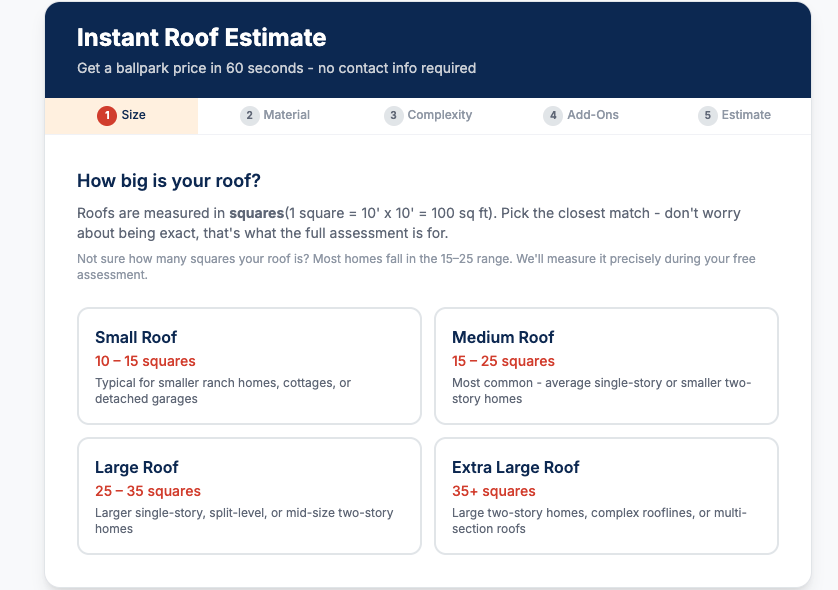
At French Roofing, we are licensed (CCB #203933), insured, and CertainTeed Certified, which means we can offer manufacturer-backed warranties that non-certified contractors simply cannot. We pull permits on every job, communicate throughout the inspection process, and give you a written contract with clear pricing before any work begins. If decking damage shows up during tear-off, we price it by the sheet and get your approval before we proceed. We also offer financing options for homeowners who need flexibility on payment. If you are in Damascus, Clackamas, Happy Valley, or anywhere in the greater Portland metro, we would be glad to walk you through our process. Check out our completed projects and then get your estimate.
FAQ
What should be on a roof contractor questions checklist?
A roof contractor questions checklist should cover licensing verification, general liability and workers' compensation insurance, permit handling, material specifications, warranty types, change order procedures, and payment structure. Addressing all of these before signing a contract protects you from the most common roofing disputes.
Is a contractor license the same as a business license?
No. A contractor license is issued by a state or local licensing board and confirms the contractor meets specific trade requirements. A business license only confirms the company is registered to operate. Always ask for the contractor license number and verify it independently.
Who is responsible for pulling roofing permits?
The roofing contractor is responsible for pulling all required permits before work begins. Confirm this in writing and ask whether permit fees are included in your estimate. Skipping permits can affect your insurance coverage and complicate a future home sale.
What is the difference between a material warranty and a workmanship warranty?
A material warranty covers defects in the shingles or roofing products and is issued by the manufacturer. A workmanship warranty covers installation errors and is issued by the contractor. You need both in writing before the job starts.
How do I protect myself from storm-chasing roofing scams?
Never pay in advance without a fully executed contract, verified insurance certificates, and a clear written scope of work. Contractors who pressure you for a large upfront payment or resist providing documentation are the ones to avoid.