
Comparing roofing material types means evaluating the trade-offs among installed cost, lifespan, fire rating, wind resistance, weight, maintenance burden, and warranty before you spend a dollar. The right material for your neighbor's house may be the wrong one for yours, and that gap can cost you thousands over time. This guide walks you through every major roofing material, from asphalt shingles and standing seam metal to natural slate and clay tile, so you can make a decision grounded in facts rather than a contractor's inventory. CertainTeed, one of North America's largest roofing manufacturers, offers products across nearly every category covered here, which matters when you're thinking about warranty backing and product consistency.
What are the main roofing material types?
Roofing material comparisons come down to trade-offs across seven factors: installed cost, lifespan, fire rating, wind resistance, weight, maintenance, and warranty. Here's how the most common types stack up.
Asphalt shingles are the most widely installed roofing material in the United States. They come in two main forms. Three-tab shingles are the thinner, flat option that runs roughly $3.00 to $4.50 per square foot installed and lasts 15 to 20 years. Architectural shingles (also called dimensional or laminate shingles) are thicker, carry a more textured look, and cost approximately $4.50 to $7.50 per square foot installed with a lifespan of 25 to 30 years. CertainTeed's Landmark and Landmark Pro lines are two of the most recognized architectural shingle products on the market.
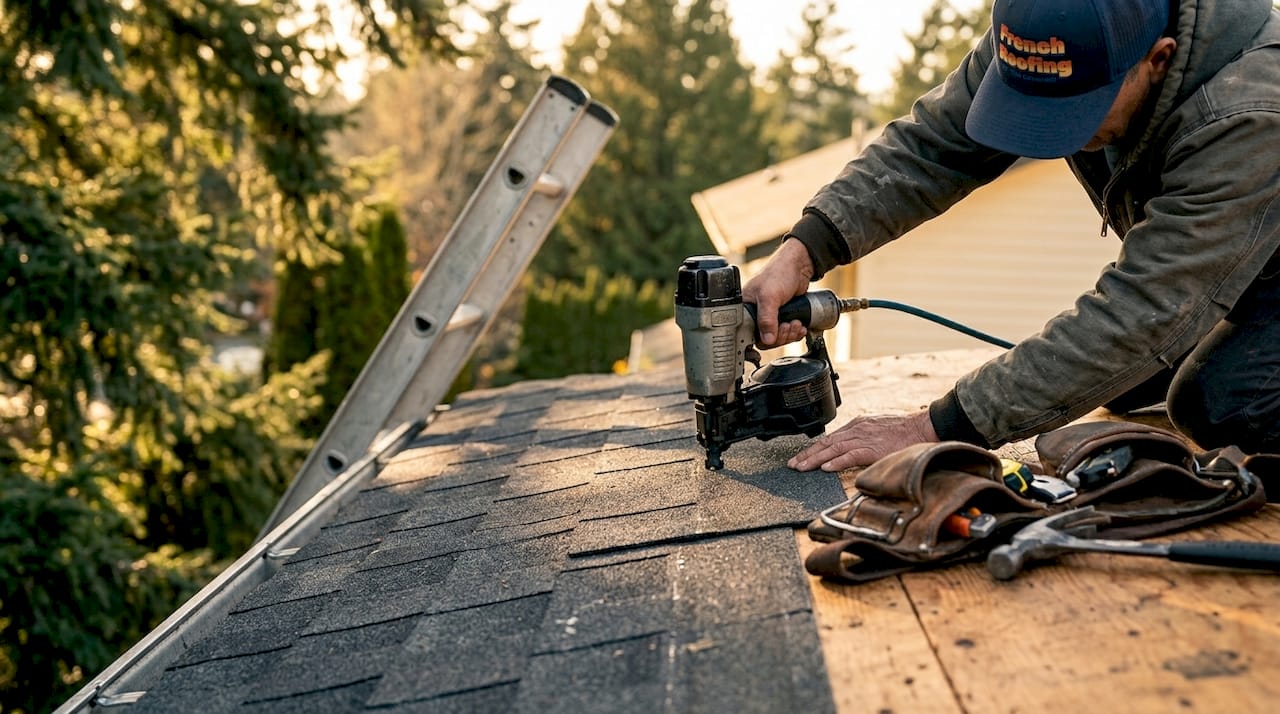
Metal roofing covers a wide range of products. Standing seam metal panels use concealed fasteners and interlock at raised seams, which dramatically reduces leak risk. Exposed-fastener metal panels cost less upfront but require more maintenance over time. Metal shingles mimic the look of wood shakes or slate while delivering metal's durability. Metal roofing lasts 40 to 70 years compared to asphalt's 15 to 25 years, and manufacturer warranties commonly run 30 to 50 years versus 15 to 25 years for asphalt.
Natural slate is the longest-lasting option available, with a lifespan of 75 to 150 years and installed costs ranging from $15 to $30 per square foot. It's heavy, requires a reinforced roof structure, and demands skilled installation. Synthetic slate, made from rubber or polymer composites, delivers a similar look at a fraction of the weight and cost, typically in the $7 to $12 range per square foot.
Clay and concrete tiles are popular in the Southwest and Mediterranean-style homes. They're fire-resistant and durable, but they're also heavy. A structural engineer review is often required before installation. Wood shakes and shingles offer a natural aesthetic but require regular maintenance, including cleaning and treatment, especially in wet climates like the Pacific Northwest. Flat roof membranes (EPDM, TPO, and PVC) apply to low-slope sections and are evaluated separately from steep-slope materials.
| Material | Installed Cost (per sq ft) | Lifespan | Fire Rating | Typical Warranty |
|---|---|---|---|---|
| 3-tab asphalt shingles | $3.00–$4.50 | 15–20 years | Class A | 15–25 years |
| Architectural shingles | $4.50–$7.50 | 25–30 years | Class A | 25–30 years |
| Standing seam metal | $10–$18 | 50–70 years | Class A | 30–50 years |
| Natural slate | $15–$30 | 75–150 years | Class A | Lifetime |
| Synthetic slate | $7–$12 | 40–50 years | Class A | 30–50 years |
| Clay/concrete tile | $10–$20 | 40–50 years | Class A | 30–50 years |
| Wood shakes | $6–$10 | 20–30 years | Class B/C | 15–20 years |
Pro Tip: When you see a cost per square foot, remember that "square foot" in roofing refers to the surface area of your roof, not your home's footprint. A 2,000 sq ft house often has 2,400 to 2,800 sq ft of actual roof surface depending on pitch.
How do cost and lifespan compare across roofing materials?
The average full roof replacement in the U.S. runs $9,515, with a typical range of $5,867 to $13,212. That number shifts significantly based on material choice, labor rates in your area, and roof complexity. Understanding the difference between upfront cost and lifecycle cost is where most homeowners leave money on the table.
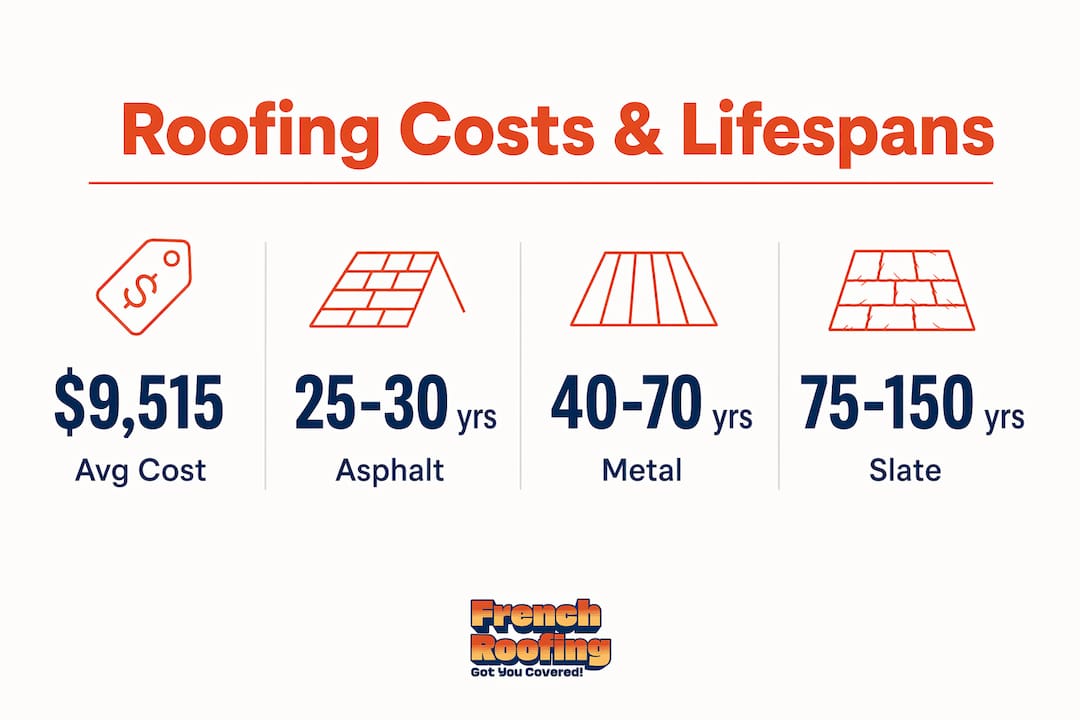
Asphalt shingles win on upfront cost every time. A 2,500 sq ft roof with architectural shingles might run $12,000 to $18,000 installed. That same roof in standing seam metal could run $25,000 to $45,000. The gap looks discouraging until you factor in replacement cycles. Asphalt shingles typically need replacement every 25 to 30 years. Metal roofing, installed correctly, may never need replacement during your ownership of the home.
Metal roofs save $5,000 to $12,000 over 25 years versus architectural shingles when you account for avoided replacements, energy savings from reflective coatings, and reduced maintenance costs. Metal roofs can also add 1 to 6% to home resale value, while asphalt shingles typically add no premium beyond baseline. On top of that, insurance discounts of 5 to 35% apply to qualifying metal roofs in some states, which compounds the savings over time.
Pro Tip: Get your estimate broken down by material cost, labor, and roofing system components (underlayment, ice and water shield, ventilation, and flashing). A low material price can be offset by cheap system components that shorten your roof's life by years.
| Material | Approx. installed cost (2,500 sq ft) | Replacements in 50 years | Estimated 50-year total |
|---|---|---|---|
| Architectural shingles | $12,000–$18,000 | 1–2 | $24,000–$54,000 |
| Standing seam metal | $25,000–$45,000 | 0 | $25,000–$45,000 |
| Natural slate | $37,500–$75,000 | 0 | $37,500–$75,000 |
The math on metal and slate gets more favorable the longer you stay in the home. If you're planning to sell in five years, architectural shingles are the practical choice. If you're in it for the long haul, the higher upfront investment in metal or slate pays off clearly.
What maintenance and durability factors should you consider?
The durability of roofing materials varies more than most homeowners expect, and maintenance requirements can make or break a material choice depending on your time and budget.
Maintenance levels by material:
- Asphalt shingles: Moderate maintenance. Inspect annually, clear debris from valleys and gutters, and watch for granule loss or curling edges. Moss and algae growth is common in wet climates and requires treatment with zinc strips or algae-resistant shingles like CertainTeed's Landmark IR.
- Metal roofing: Low maintenance. Inspect fasteners and sealants every few years. Standing seam systems with concealed fastener systems significantly reduce leak risk compared to exposed-fastener panels. Keep gutters clear and check for any scratches that could lead to rust on non-Galvalume panels.
- Wood shakes: High maintenance. Require cleaning, re-treatment, and occasional replacement of individual shakes every few years. Not recommended for areas with heavy rainfall or wildfire risk without fire-retardant treatment.
- Slate and tile: Low maintenance once installed correctly, but repairs require a skilled installer. Walking on slate incorrectly breaks tiles. Always hire a contractor with documented slate experience.
- Flat membranes (EPDM, TPO, PVC): Inspect seams and penetrations annually. Ponding water is the main enemy. Address drainage issues promptly.
Wind resistance and fire ratings also differ by material. Most asphalt, metal, slate, and tile products carry a Class A fire rating, the highest available. Wood shakes without fire-retardant treatment typically rate Class B or C, which matters significantly in wildfire-prone areas of Oregon and the broader Pacific Northwest.
Weight is a factor that catches homeowners off guard. Natural slate can weigh 800 to 1,500 pounds per square (100 sq ft). Standard asphalt shingles weigh 200 to 350 pounds per square. If you're replacing a wood shake roof with slate or tile, a structural assessment is not optional. It's a requirement.
Full roofing system specs matter as much as the surface material. Underlayment, ice and water shield, ventilation design, and flashing quality all affect how long your roof actually lasts. Installation details alone can affect roof lifespan by 50% or more. The surface material gets all the attention, but the system underneath it is what keeps your home dry.
How to match roofing materials to your home, climate, and plans
No single roofing material is universally best. The right choice depends on your climate, budget, how long you plan to stay, your neighborhood's aesthetic standards, and your insurance situation.
Climate zone guidance:
- High hail risk (Midwest, Front Range): Look for Class 4 impact-resistant shingles or metal roofing. Some insurers offer discounts specifically for Class 4 products.
- Hurricane and high-wind zones: Metal roofing with proper fastening systems and architectural shingles rated for 130 mph or higher are the standard choices.
- Wildfire-prone areas (Pacific Northwest, California): Class A fire-rated materials are non-negotiable. Metal, tile, and Class A asphalt shingles are all appropriate. Wood shakes without fire treatment are a liability.
- Hot climates: Reflective metal roofing and light-colored tile reduce cooling loads. Dark asphalt shingles absorb heat and can increase energy costs.
- Cold and wet climates (like the Portland metro): Moss and algae resistance matters. Algae-resistant shingles, metal, and slate all perform well. Proper ventilation is critical to prevent ice dams.
How long you plan to stay matters a lot. If you're staying fewer than 10 years, architectural shingles offer the best return. You get a clean, warranted roof without overpaying for longevity you won't use. If you're staying 20 or more years, metal roofing's lifecycle savings become real and measurable. Natural slate makes sense for a forever home with the structural capacity to support it.
HOA rules and neighborhood aesthetics also factor in. Some communities restrict metal roofing or require specific colors. Check your HOA guidelines before you fall in love with a material. You can explore past roofing projects to get a sense of how different materials look on real homes in the Portland area.
Resale value is worth a brief mention. A new roof of any material adds value by removing a buyer's concern about replacement costs. Metal roofing adds a measurable premium in some markets. Architectural shingles are the safe baseline that buyers expect and accept without question.
Key takeaways
The most cost-effective roofing material depends on your timeline, climate, and budget, not on a single universal ranking.
| Point | Details |
|---|---|
| Lifespan drives lifecycle cost | Metal roofing lasts 40 to 70 years versus 25 to 30 for asphalt, reducing long-term replacement costs. |
| System specs matter as much as surface material | Underlayment, ventilation, and flashing quality affect roof lifespan by 50% or more. |
| Climate should guide your material choice | Wildfire zones need Class A materials; wet climates need algae resistance and proper ventilation. |
| Upfront cost vs. long-term savings | Metal roofs can save $5,000 to $12,000 over 25 years despite higher initial installation costs. |
| Stay duration affects best ROI | Architectural shingles suit shorter stays; metal or slate pays off for homeowners staying 20-plus years. |
What I've learned after years of comparing roofing materials
I've been putting roofs on homes in the Damascus and Portland metro area since 2014, and the question I get most often is some version of "what's the best roofing material?" My honest answer is that it depends, but not in a vague way. It depends on three specific things: how long you're staying, what your climate throws at your roof, and what your budget looks like over time rather than just today.
The biggest misconception I run into is that asphalt shingles are always the practical choice. They often are, but not always. I've seen homeowners replace a 25-year architectural shingle roof and then sell the house eight years later. That's a reasonable call. But I've also seen people put a second asphalt roof on a home they've lived in for 30 years and plan to pass on to their kids. That's where metal or slate would have served them far better.
The other thing I'd push back on is the idea that material choice is the whole decision. I've seen quality metal roofs fail early because of poor installation, specifically exposed fasteners that weren't sealed correctly or standing seam panels that weren't properly detailed at the eaves. And I've seen modest architectural shingle roofs last 35 years because the system underneath them was done right. Contractor skill and system specification are not secondary concerns. They're the difference between a roof that performs and one that disappoints.
If you're in the Portland area and weighing your options, I'd encourage you to ask any contractor you talk to about their full system spec, not just the shingle brand. That question alone will tell you a lot about who you're dealing with. You can also check out our contractor questions checklist before your next conversation.
— Sean
How French Roofing can help you choose and install the right roof
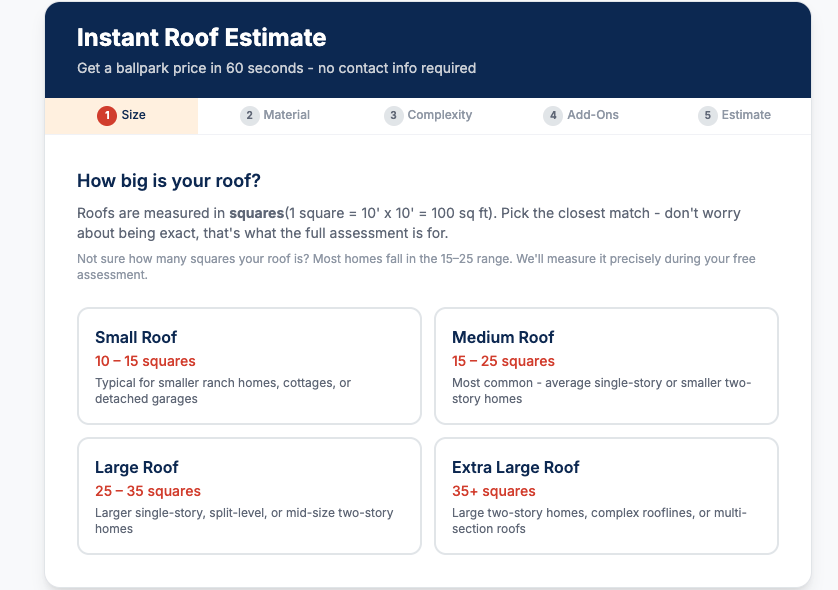
French Roofing is a family-owned roofing contractor based in Damascus, OR, serving the greater Portland metro area since 2014. We're CertainTeed Certified (CCB #203933), which means we're trained and vetted to install CertainTeed products correctly and back them with the strongest available manufacturer warranties. Whether you're comparing architectural shingles, metal roofing, or something else entirely, we'll walk you through the trade-offs honestly and give you a clear picture of what makes sense for your home and budget. Our roof replacement services cover the full system, not just the surface material. We also offer financing options if upfront cost is a concern. Get Instant Estimate Online!
FAQ
What is the longest-lasting roofing material?
Natural slate lasts 75 to 150 years, making it the longest-lasting option for steep-slope roofs. Standing seam metal roofing follows closely, with a typical lifespan of 50 to 70 years.
Is metal roofing worth the higher upfront cost?
Metal roofing saves an estimated $5,000 to $12,000 over 25 years compared to architectural shingles when you factor in avoided replacements, energy savings, and potential insurance discounts. It's worth the cost if you plan to stay in the home long-term.
How do I choose between asphalt shingles and metal roofing?
If you're staying fewer than 10 to 15 years, architectural shingles offer better value. If you're staying longer, metal roofing's lifecycle savings and lower maintenance burden make it the stronger financial choice.
Does roofing material affect home insurance rates?
Yes. Metal roofs can qualify for insurance discounts of 5 to 35% in some states due to their fire resistance and wind performance. Class 4 impact-resistant shingles also qualify for discounts in hail-prone regions.
What roofing material works best in the Pacific Northwest?
Algae-resistant architectural shingles, standing seam metal, and synthetic slate all perform well in the wet Pacific Northwest climate. Wood shakes require heavy maintenance in this region and are generally not recommended without fire-retardant treatment.
Recommended
- Roofing Financing Options For Homeowners 2026 Guide | French Roofing Blog | French Roofing
- Roof Contractor Questions Checklist: Hire Right in 2026
- What Does Certainteed Certified Mean For Homeowners | French Roofing Blog | French Roofing
- Roof Replacement Financing Benefits For Homeowners | French Roofing Blog | French Roofing