
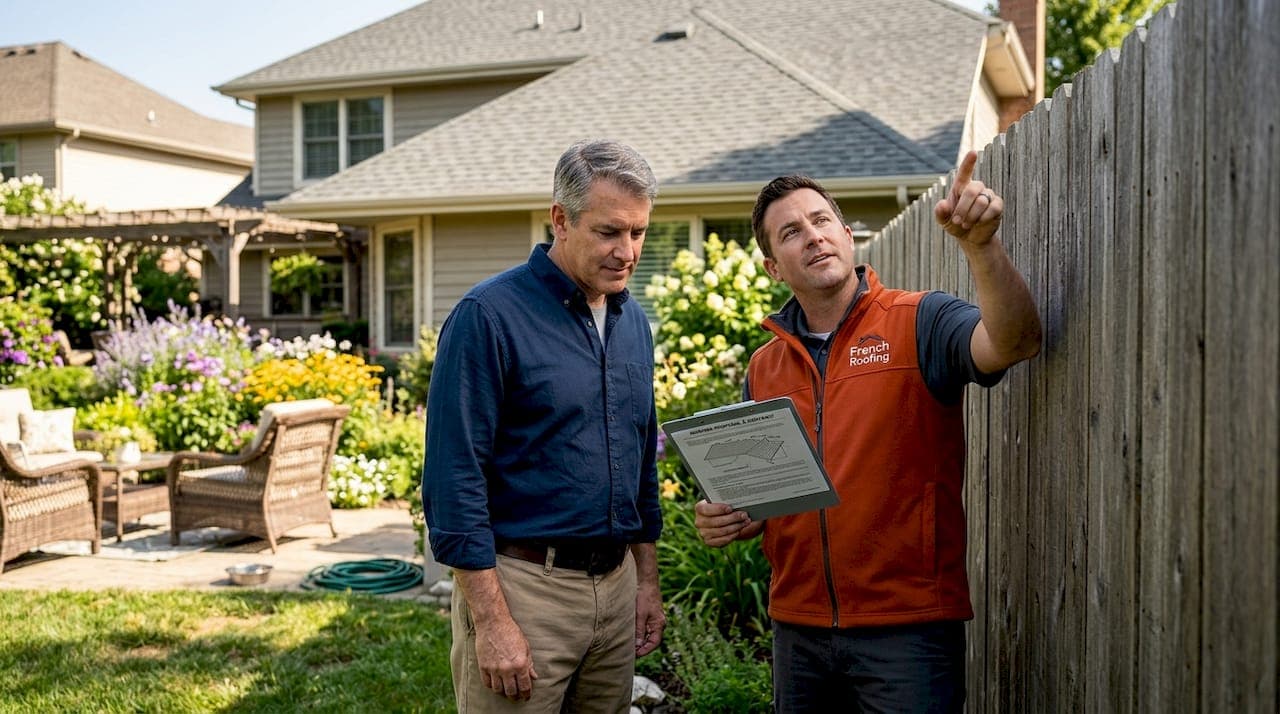
When you’re hiring a roofer, the phrase “CertainTeed Certified” carries real weight. But most homeowners don’t know what it actually means or why it matters for their project. Understanding what does CertainTeed certified mean helps you make a smarter hiring decision, one that directly affects your installation quality, your warranty coverage, and your long-term peace of mind. This guide breaks down the certification, what contractors must do to earn it, and why choosing a certified contractor protects you in ways that go far beyond the day your new roof goes on.
Table of Contents
Key Takeaways
| Point | Details |
|---|---|
| Certification signals proven competence | CertainTeed certified contractors pass exams and meet strict installation standards before earning the credential. |
| Extended warranties require certification | Only certified contractors can offer manufacturer-backed warranties that cover both materials and workmanship. |
| Fewer than 2% qualify | CertainTeed Select ShingleMaster is one of the rarest credentials in residential roofing nationwide. |
| Certification must be renewed annually | Contractors maintain their status through ongoing training and meeting financial and insurance standards each year. |
| Verification is straightforward | You can confirm a contractor’s certification status through CertainTeed’s official directory before signing any contract. |
What does CertainTeed certified mean?
CertainTeed is one of North America’s largest manufacturers of roofing materials, including shingles, underlayment, and ventilation products. When a contractor earns CertainTeed certification, it means CertainTeed itself has reviewed that contractor’s skills, training, and business practices and decided they meet the manufacturer’s standards for installing its products correctly.
The certification program has multiple tiers. The entry level is Shingle Applicator, which shows basic product knowledge. Above that is Master Shingle Applicator, which requires more advanced training. The top tier is the Select ShingleMaster, which is the most rigorous level and the one that unlocks the best warranty options for homeowners. Fewer than 2% of roofing contractors nationwide achieve this certification, which tells you how selective the process is.
Here is what the certification actually requires:
-
Completion of CertainTeed’s training program, including study of the Shingle Technology Manual
-
Passing a detailed certification exam covering product knowledge and installation best practices
-
Demonstrated installation quality through past work and inspections
-
Proof of proper licensing and insurance
-
Meeting financial stability standards set by CertainTeed
The certification is not a marketing badge a contractor can self-award. It is an endorsement from the manufacturer based on competence and proven performance. That distinction matters when you are trusting someone with one of the most expensive components of your home.
Pro Tip: Ask any contractor you are considering to show you their current CertainTeed certification certificate. It should include the tier level and an expiration date, confirming it is active and not lapsed.
Benefits of choosing a CertainTeed certified contractor
The most tangible benefit you get from hiring a certified contractor is access to better warranty coverage. Standard roofing warranties cover materials only. If a shingle fails because of a manufacturing defect, you are covered. But if the installation was done incorrectly and water gets in, you are on your own.
Certified contractors change that equation. Warranty coverage from certified contractors typically includes both materials and labor, which means if something goes wrong because of how the roof was installed, the manufacturer stands behind it. That is a level of protection you simply cannot get from an uncertified roofer, regardless of how experienced they claim to be.
Here is a summary of the key benefits:
-
Extended warranty periods. Certified contractors provide extended warranties with longer coverage periods than standard options.
-
Workmanship coverage. Both materials and labor are covered, reducing your out-of-pocket risk if installation issues arise.
-
Priority access to materials. Certified contractors have direct access to manufacturer technical teams and material supplies, which matters especially during supply shortages.
-
Technical support. When a complex installation challenge comes up, certified contractors can reach CertainTeed’s technical experts directly for guidance.
-
Reduced financial risk. Certification requires proof of insurance and financial stability, which protects you if something goes wrong on the job.
If you live in a region with demanding weather, the stakes are even higher. Homeowners in harsh climates benefit most from certified contractors because premium products installed correctly with enhanced warranties provide real protection when conditions get severe.
“Choosing a certified contractor is not just about the product you are buying. It is about the accountability that comes with the installation. When the manufacturer certifies the installer, you have two parties standing behind the quality of your roof.”
How contractors earn CertainTeed certification
The CertainTeed certification process is not a one-time test. It is an ongoing commitment that contractors must maintain to keep their status active. Understanding the steps involved helps you appreciate what a certified contractor has actually done to earn that credential.
-
Complete CertainTeed training. Contractors must study the CertainTeed Shingle Technology Manual and complete the manufacturer’s formal training program covering product specifications, installation techniques, and quality standards.
-
Pass the certification exam. The exam tests both product knowledge and installation procedures in detail. Passing this exam is required before any certification level is awarded.
-
Demonstrate installation quality. Contractors submit documentation of past work and may be subject to inspections to confirm their installations meet CertainTeed’s standards.
-
Provide proof of licensing and insurance. CertainTeed requires valid contractor licenses and adequate insurance coverage as part of the application.
-
Meet financial stability requirements. Contractors must demonstrate their business is financially stable, reducing the risk that they disappear mid-project or cannot honor their commitments.
-
Renew certification annually. Contractors must maintain standards yearly through ongoing education and re-verification of their credentials to retain active certification status.
What this means for you as a homeowner is straightforward. A certified contractor has not just completed training once. They are actively engaged in keeping their skills current and their business practices in line with manufacturer expectations. That annual renewal requirement is one of the most underrated aspects of the certification because it filters out contractors who let their standards slip over time.
Pro Tip: When a contractor tells you they are CertainTeed certified, ask what tier they hold. Select ShingleMaster unlocks the highest warranty options. Lower tiers may still be certified but offer different warranty levels.
Certified vs. non-certified contractors
Understanding the practical differences between certified and non-certified contractors helps you weigh your options clearly. The gap is larger than most homeowners expect.
| Factor | CertainTeed Certified | Non-Certified |
|---|---|---|
| Warranty coverage | Materials and workmanship, extended periods | Materials only, standard periods |
| Training | Manufacturer-verified, exam-based | Varies widely, no standardized test |
| Manufacturer support | Direct access to technical teams | No direct manufacturer support |
| Accountability | Endorsed by manufacturer, renewal required | Self-reported experience only |
| Insurance requirement | Verified by CertainTeed | No third-party verification |
| Risk to homeowner | Lower, due to coverage and accountability | Higher, limited recourse if issues arise |
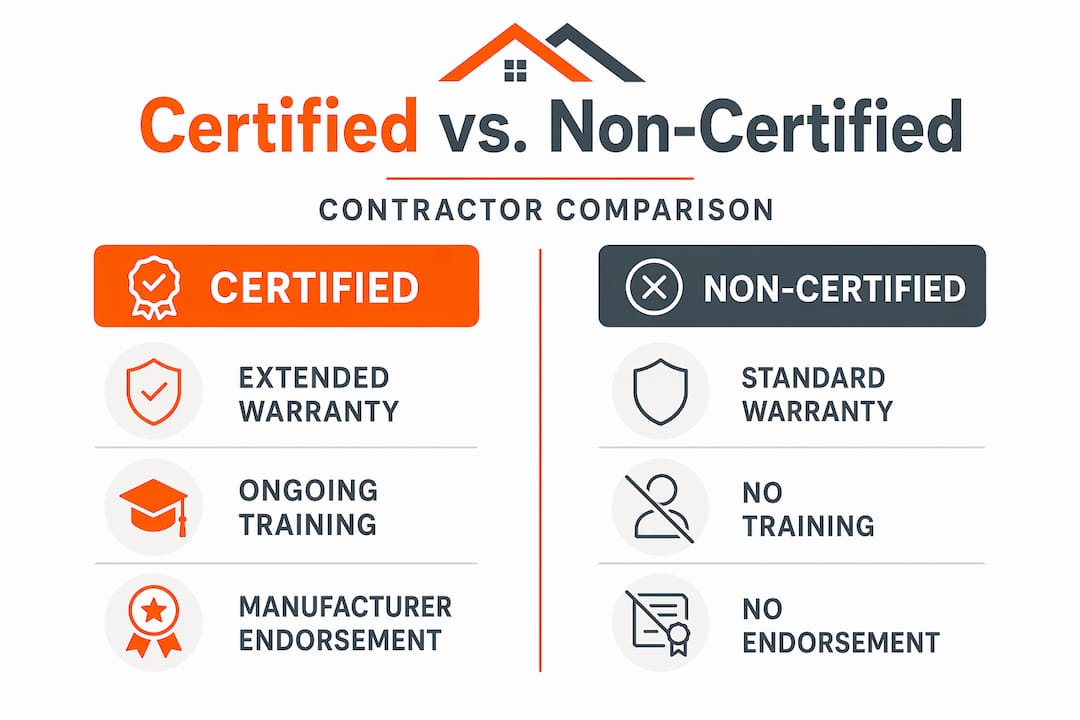
The cost difference between certified and non-certified contractors is often smaller than homeowners assume. A non-certified contractor may quote a lower price upfront, but if installation problems surface after the job is done, you are paying out of pocket for repairs that a certified contractor’s warranty would have covered. Over a 20 to 30 year roof lifespan, that difference adds up significantly.
Non-certified contractors can be skilled. The certification is not the only measure of quality in the industry. But it is the only measure that comes with manufacturer verification, documented training, and warranty-backed accountability. For a project as significant as a roof replacement, that verification matters.
How to verify CertainTeed certification
Before you sign any contract, take a few minutes to confirm the certification yourself. It is a simple process that protects you from misleading claims.
-
Use CertainTeed’s online contractor directory. CertainTeed maintains a searchable database of certified contractors. You can look up a contractor by name or location to confirm their current certification status and tier level.
-
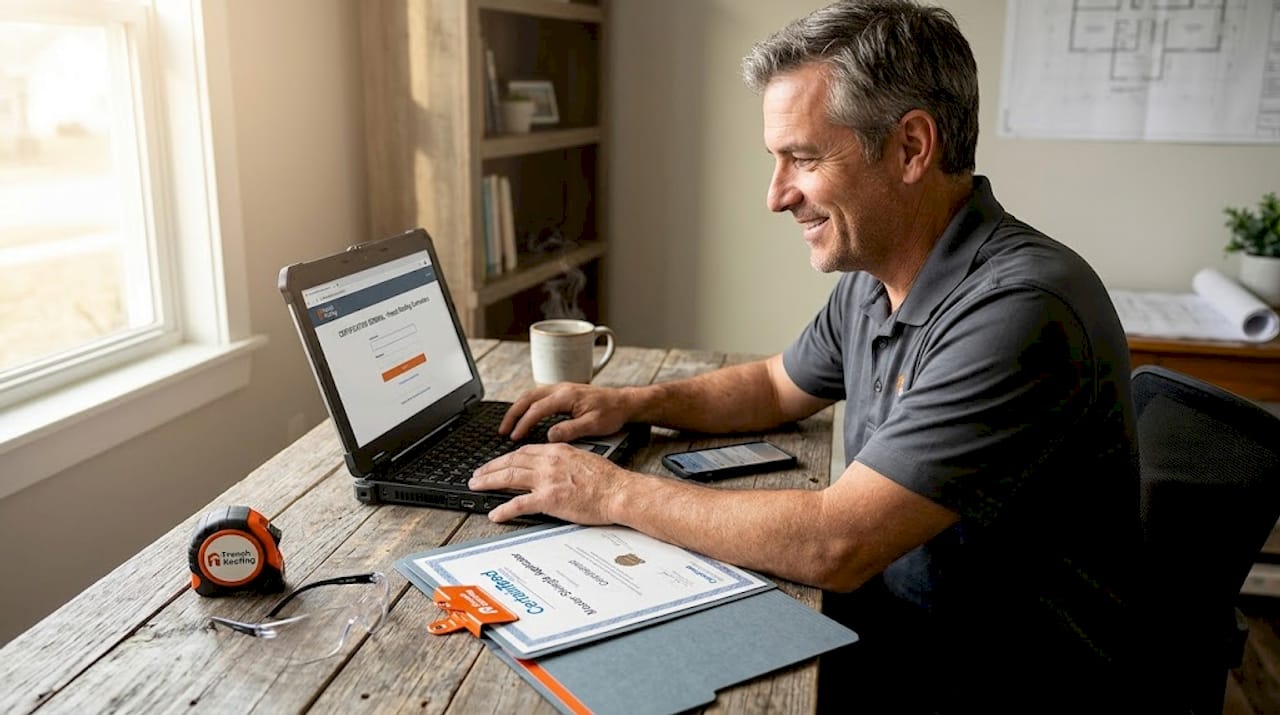
Ask for the certification certificate directly. A legitimate certified contractor will have documentation they can show you. The certificate should include the contractor’s name, certification tier, and expiration date.
-
Check that the certification is current. Verification of certification status should confirm the credential is active, not expired. An expired certification means the contractor no longer meets current standards.
-
Ask about the warranty they can offer. The warranty level a contractor can provide tells you their certification tier. If they cannot explain the warranty in specific terms, that is a red flag.
-
Request documentation before work begins. Get the warranty paperwork in writing before the project starts, not after. Verbal assurances are not enforceable.
When you work with a certified roofing contractor in your area, this verification process takes less than ten minutes and gives you confidence that the person on your roof has earned the right to be there.
My take on why certification actually matters
I’ve seen homeowners skip the certification check because a contractor seemed trustworthy, gave a great price, and had solid reviews. And sometimes that works out fine. But I’ve also seen what happens when it doesn’t. A roof installed without manufacturer-verified training can look perfect on day one and start failing within a few years because of subtle installation errors that only show up after weather stress.
What I’ve learned from working in this industry is that certification is not about distrust. It is about accountability. When a contractor holds a Select ShingleMaster credential, you have a third party, the manufacturer itself, standing behind the quality of that installation. That is not something you can replicate with references alone.
The homeowners I’ve seen make the best decisions are the ones who treat certification as a baseline requirement, not a bonus. They ask for it upfront, they verify it independently, and they use it as one of several filters when choosing who to hire. The ones who skip that step sometimes get lucky. But they are also the ones who call me later wondering why their warranty claim was denied.
My honest advice: make CertainTeed certification a non-negotiable part of your contractor checklist. The credential exists precisely because roofing quality is hard to assess from the outside, and you deserve more than a handshake guarantee.
— Sean
Work with a certified roofing team you can trust
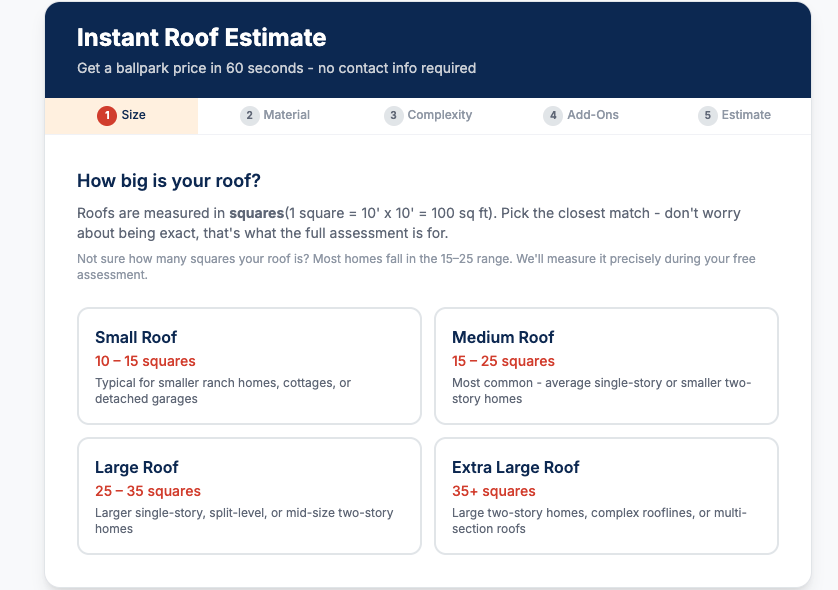
Frenchroofing is a licensed, CertainTeed Certified roofing contractor serving the Greater Portland Metro area. That certification is not a marketing claim. It means the team has completed CertainTeed’s training, passed the exams, and meets the ongoing standards required to offer you the manufacturer’s best warranty options. When you choose Frenchroofing for your roof replacement project, you get workmanship coverage and extended material warranties that non-certified contractors simply cannot provide. Financing is also available to make your project manageable. Whether you need a full replacement, a repair, or an inspection, you can explore all services or reach out directly to get started with a certified team that treats every home like family.
FAQ
What does CertainTeed certified mean for a homeowner?
It means the contractor has passed CertainTeed’s training and exams, meets insurance and licensing requirements, and can offer extended manufacturer warranties covering both materials and workmanship. This gives you more protection than a standard roofing contract provides.
What is the highest level of CertainTeed certification?
The Select ShingleMaster is the highest tier of CertainTeed certification. It is held by fewer than 2% of contractors nationwide and unlocks the most comprehensive warranty options available to homeowners.
How do I verify a contractor’s CertainTeed certification?
You can verify certification through CertainTeed’s official online contractor directory or by asking the contractor to show you their current certification certificate, which should include the tier and expiration date.
Do certified contractors cost more?
Certified contractors may have slightly higher upfront costs in some cases, but the extended warranty coverage they provide, including workmanship protection, can save you significantly if installation issues arise over your roof’s lifespan.
How often do contractors need to renew CertainTeed certification?
Contractors must renew their certification annually by meeting ongoing training, insurance, and standards requirements set by CertainTeed to maintain their active status.