
Structural roof repair is the process of fixing damage to the core framing components of your roof, including rafters, trusses, ridge boards, and sheathing, to restore the roof's load-bearing capacity and weather resistance. Unlike replacing a few shingles, this type of work addresses the skeleton of your roof. Ignoring it puts your home's safety at risk and typically leads to far more expensive repairs down the road. The International Residential Code (IRC) sets the standards that govern this work, and CertainTeed-certified contractors like French Roofing follow those standards on every job.
How to recognize signs your roof needs structural repair
Most homeowners notice something is wrong before they know what to call it. A sagging roofline is the clearest signal. If your ridge line dips in the middle or your roof plane looks wavy rather than flat, the framing underneath is compromised. That's not a cosmetic issue you can patch with caulk.
Here are the most common warning signs that point to structural damage rather than surface wear:
- Sagging or uneven roofline visible from the ground, especially along the ridge or eaves
- Interior ceiling cracks or bowing drywall, which often indicate rafter or truss movement
- Water stains on ceilings or walls that persist after shingle repairs, suggesting decking failure
- Mold growth in the attic, which signals prolonged moisture intrusion through compromised sheathing (see attic mold prevention for related guidance)
- Daylight visible through the attic where there should be none
- Storm damage indicators like fallen branches, hail dents on metal flashing, or missing sections of decking after high winds
A professional roof inspection is the only reliable way to confirm whether what you're seeing is structural or cosmetic. DIY assessment from the attic can give you clues, but it won't tell you whether a rafter has lost its load-bearing capacity or whether a truss has been improperly modified by a previous owner.
Pro Tip: Schedule a roof inspection before storm season every year. Catching a cracked rafter in September is a minor repair. Finding it after a February ice storm is a major one.
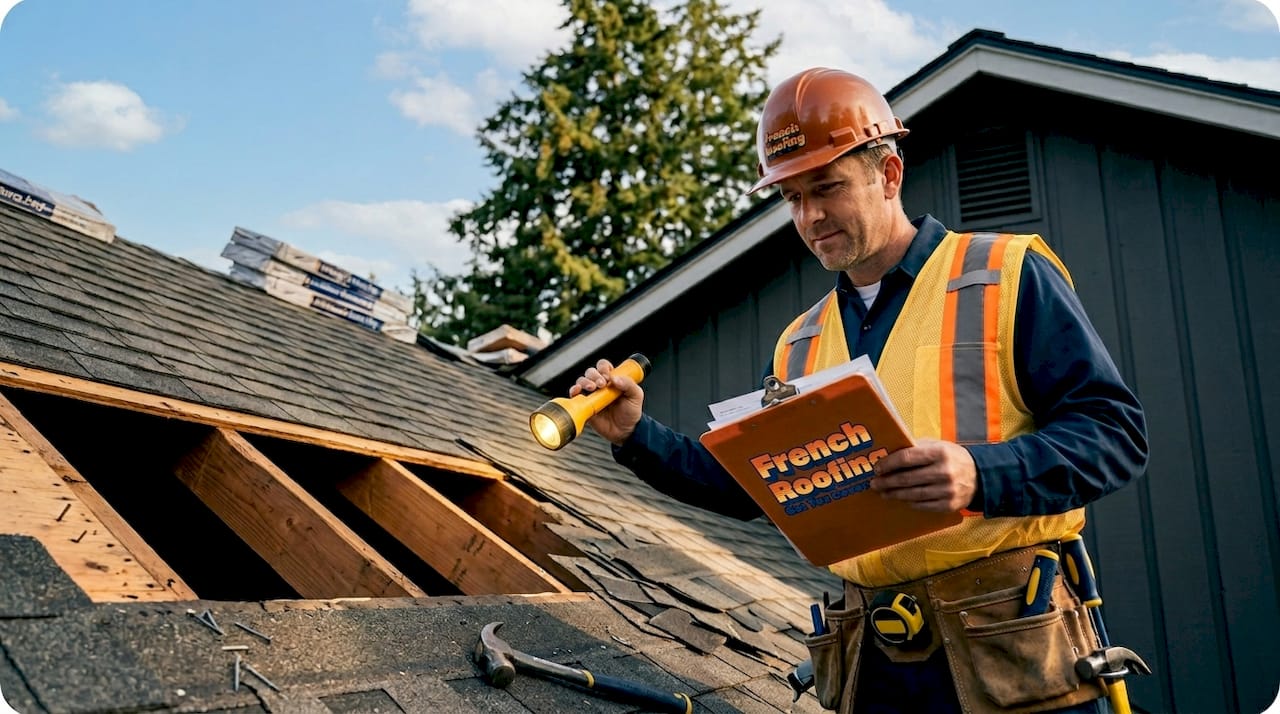
Delaying roof repairs before storm season can lead to catastrophic interior damage from wind uplift and shingle failure. That's not a scare tactic. It's what happens when a weakened rafter meets 60 mph winds.
What permits and expertise are required before starting repairs
Structural roof repair is not a weekend DIY project. The moment you're touching framing, most jurisdictions require a permit. This is where homeowners sometimes get into trouble by assuming a roofing job is just roofing.
Here's what you'll typically need before work begins:
- Building permit from your local authority having jurisdiction (AHJ), required for any structural framing modification
- Structural engineer's drawings if trusses are involved, since truss modifications must follow stamped engineer drawings
- Licensed and insured contractor with experience in roof framing repair, not just shingle replacement
- Safety equipment including fall protection, scaffolding or roof jacks, and proper PPE
- Materials list covering dimensional lumber, OSB or plywood sheathing, corrosion-resistant nails, and synthetic underlayment
| Requirement | DIY Feasible? | Notes |
|---|---|---|
| Building permit | No | Required for structural framing work in most jurisdictions |
| Engineer drawings (trusses) | No | Stamped plans required by IRC 2024 |
| Licensed contractor | Recommended | CCB license required in Oregon (e.g., CCB #203933) |
| Material sourcing | Yes | Homeowner can purchase materials with contractor guidance |
| Final inspection | No | AHJ inspector must sign off on structural work |
Pro Tip: Call your local building department before any work starts. Ask specifically whether your repair scope triggers a permit. In Oregon, the threshold is lower than most homeowners expect.
The IRC 2018 sets the baseline for fastener requirements, sheathing specs, and framing standards. A licensed contractor knows these codes. A handyman who "does roofs on the side" often doesn't.
Step-by-step overview of typical structural repair methods
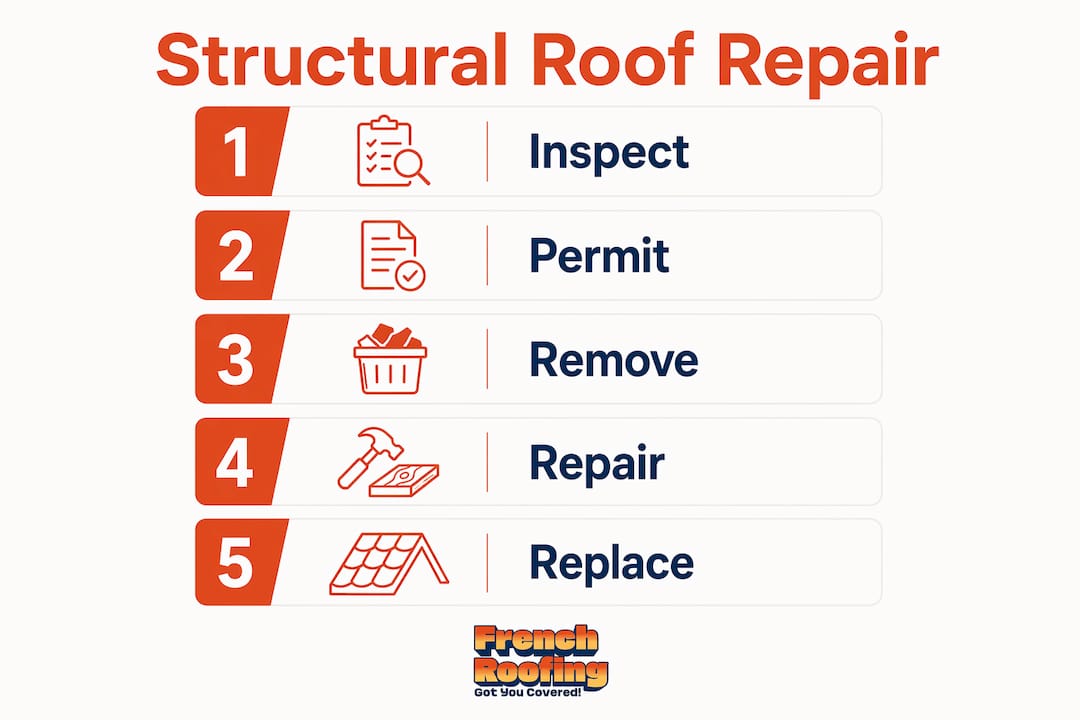
Understanding what actually happens during a structural roof repair helps you ask better questions and avoid being surprised by the scope of work. Here's how a typical repair unfolds:
- Damage assessment. A licensed contractor or structural engineer inspects the affected area, documents the extent of framing damage, and determines whether sistering, full replacement, or engineered repair is needed.
- Temporary weatherproofing. Before any framing is exposed, the area gets tarped or covered with synthetic underlayment to prevent further water intrusion during the repair window.
- Shingle and decking removal. Damaged shingles and sheathing are stripped back to expose the framing. Decking replacement typically costs $2 to $5 per square foot in materials, with labor added on top.
- Framing repair. This is the core of the job. Sistering a rafter means bolting a new piece of dimensional lumber alongside the damaged one. Replacing a truss section requires engineer-approved drawings. Unauthorized notching or cutting of trusses is one of the most common and dangerous mistakes in residential roofing.
- Sheathing installation. New OSB or plywood is installed and fastened per code. Spacing, nail size, and pattern all matter for wind uplift resistance.
- Underlayment and shingles. Synthetic underlayment goes down first as a water barrier. CertainTeed shingles or equivalent are then installed per manufacturer specs and IRC fastening requirements.
- Final inspection. The AHJ inspector reviews the structural work before it's covered. This step is not optional.
On fastening: IRC 2018 requires 4 nails per shingle in standard conditions and 6 nails per shingle in high-wind zones exceeding 110 mph. That difference matters significantly for uplift resistance in storm-prone areas.
Pro Tip: Always use hot-dipped galvanized or stainless steel nails. Electro-galvanized nails corrode faster and can cause shingle failure within a few years in wet climates.
Licensed contractors who follow manufacturer specs and local codes consistently deliver better wind resistance and longer roof life. That's not opinion. It's what the data on fastener compliance shows.
How much does structural roof repair typically cost?
Cost is usually the first question homeowners ask, and it's a fair one. Here's the honest breakdown.
| Repair Type | Typical Cost Range | Notes |
|---|---|---|
| Minor repairs (flashing, small patches) | $400 to $600 | Surface level, no framing involved |
| Moderate structural repairs | $1,500 to $5,000 | Sistered rafters, partial decking replacement |
| Major structural repairs | $5,000 to $8,000+ | Full truss work, large decking sections, permits |
| Full roof replacement | $8,000 to $20,000+ | When repair cost exceeds 30% of replacement value |
Major structural repairs typically exceed $5,000 due to the complexity of engineering, permitting, and multi-phase work. That number surprises some homeowners, but it reflects the real scope of the job.
Labor represents approximately 60 to 70% of total repair cost, which is why getting multiple quotes from licensed contractors matters. The materials cost is fairly fixed. Labor rates vary by region and contractor experience.
A useful rule of thumb: if your repair estimate exceeds 30% of the cost of a full roof replacement, replacement is usually the smarter financial decision. You get a new roof with a full warranty instead of a patched one with an uncertain lifespan.
A few factors that affect your final cost:
- Roof pitch and accessibility. Steeper roofs cost more to work on safely.
- Extent of water damage. Rotted decking or mold-compromised framing adds scope.
- Permit and inspection fees. These vary by jurisdiction but typically run $100 to $500.
- Regional labor rates. Roofing labor in the Pacific Northwest runs higher than national averages in many cases.
Pro Tip: Get at least three written quotes. Ask each contractor to itemize labor, materials, permits, and disposal separately. Vague lump-sum bids make it hard to compare apples to apples.
Financing is available for larger projects. French Roofing offers financing options for homeowners who need to spread the cost of a major repair or replacement.
Common pitfalls that compromise structural repairs
Even well-intentioned repairs go wrong when homeowners or contractors cut corners. Here are the mistakes worth knowing about before you hire anyone or pick up a tool:
- Skipping the permit. Unpermitted structural work can void your homeowner's insurance, create problems at resale, and leave you liable if the repair fails.
- Modifying trusses without engineering approval. Field modifications without stamped drawings are a documented cause of long-term structural failure. This is not a gray area.
- Using the wrong fastener count. Under-nailed shingles and sheathing have significantly lower wind uplift resistance. Four nails where six are required is a real failure point.
- Delaying repairs after visible damage. Pre-storm roof audits are stressed by insurance adjusters and contractors alike because waiting turns manageable repairs into total losses.
- Ignoring underlayment quality. Felt paper is the old standard. Synthetic underlayment performs significantly better as a water barrier, especially in climates with heavy rain or snow.
Structural repairs are as much engineering projects as roofing jobs, requiring careful coordination of design, code compliance, and skilled installation.
Selecting a contractor who understands both the framing side and the roofing side of the job is the single best way to avoid these pitfalls.
Key takeaways
Structural roof repair requires addressing framing components like rafters, trusses, and sheathing under permit, with licensed contractors following IRC standards, before costs escalate beyond the repair threshold.
| Point | Details |
|---|---|
| Identify structural damage early | Sagging rooflines, ceiling cracks, and persistent leaks signal framing issues, not just surface wear. |
| Permits are required | Any structural framing repair triggers a building permit in most jurisdictions, including Oregon. |
| Fastener compliance matters | IRC 2018 requires 6 nails per shingle in high-wind zones, directly affecting uplift resistance. |
| Budget realistically | Major structural repairs typically exceed $5,000; replacement is worth considering above 30% of replacement cost. |
| Hire licensed contractors | Truss modifications and framing repairs require stamped engineer drawings and licensed installation. |
Why I always recommend the inspection first
Here's something I've noticed over the years: most homeowners who call about a "roof leak" actually have a structural issue they didn't know about. The leak is just where the water shows up. The real problem is a cracked rafter, a section of rotted decking, or a truss that someone notched years ago to run HVAC through the attic.
The inspection-first approach isn't just good practice. It's the only way to scope a repair accurately. I've seen contractors quote a shingle job and miss the decking failure underneath. That's not a bargain. That's a problem deferred by six months.
One thing I'd push back on in the general advice you'll find online: not every structural repair needs a full engineering study. Sistering a rafter on a simple gable roof is straightforward work for an experienced framing carpenter. Where you absolutely need an engineer is anything involving trusses. Trusses are pre-engineered systems. Cutting or notching one without approval changes the load path in ways that aren't always visible until something fails.
For homeowners in the Portland metro area, I'd also say this: our climate is wet enough that delayed repairs compound fast. A small area of compromised sheathing in October can be a full section of rotted framing by March. The cost difference between catching it early and catching it late is usually measured in thousands of dollars.
Think long term when you're deciding between repair and replacement. A well-done structural repair on a roof with 10 good years left makes sense. The same repair on a 25-year-old roof with failing shingles and aging underlayment is often just postponing the inevitable.
— Sean
French Roofing can help with your structural repair
If you're seeing signs of structural damage or you just want to know what you're dealing with, French Roofing offers free roof inspections for homeowners in Damascus, Clackamas, Happy Valley, and the greater Portland metro. We're CertainTeed Certified, licensed (CCB #203933), insured, and bonded. We handle everything from sistered rafters and decking replacement to full structural assessments before any repair work begins.
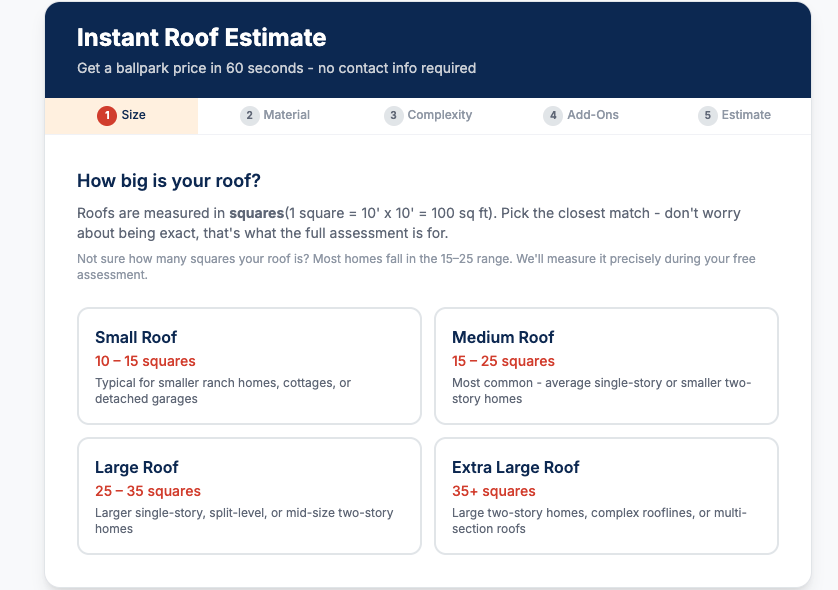
When the inspection is done, we give you a straight answer: here's what's wrong, here's what it costs, and here's whether repair or replacement makes more sense for your situation. No pressure, no runaround. If you need professional roof repair or want to explore your options, we're ready to help.
Get Instant Estimate Online!
FAQ
What is structural roof repair?
Structural roof repair fixes damage to the load-bearing components of a roof, including rafters, trusses, ridge boards, and sheathing, rather than just replacing surface shingles. It typically requires permits, licensed contractors, and in some cases a structural engineer.
How much does structural roof repair cost?
Minor repairs run $400 to $600, while major structural repairs range from $1,500 to over $8,000 depending on scope, materials, and regional labor rates. Labor typically represents 60 to 70% of the total cost.
Do I need a permit for structural roof repair?
Yes, in most jurisdictions a building permit is required any time structural framing is modified or replaced. In Oregon, your local AHJ determines the specific threshold, but framing work almost always triggers a permit requirement.
Can I modify roof trusses myself?
No. Truss modifications require stamped engineer drawings per IRC 2024, and unauthorized field modifications are a documented cause of structural failure. This work must be performed by a licensed contractor following approved plans.
How do I know if my roof needs structural repair or just new shingles?
A sagging roofline, interior ceiling cracks, persistent leaks after shingle repairs, or visible daylight in the attic all point to structural issues rather than surface wear. A professional inspection is the most reliable way to confirm the scope of damage.
Recommended
- Roof Replacement Financing Benefits For Homeowners | French Roofing Blog | French Roofing
- Roof Repair | Greater Portland Metro | French Roofing | French Roofing
- Roofing Financing Options For Homeowners 2026 Guide | French Roofing Blog | French Roofing
- What Does Certainteed Certified Mean For Homeowners | French Roofing Blog | French Roofing