

A new roof can cost anywhere from $8,000 to $20,000 or more, and most homeowners do not have that sitting in a savings account. That’s where roof replacement financing benefits become real and practical. Financing a roof, sometimes called a home improvement loan or roofing payment plan, lets you spread that cost over time without delaying a repair your home genuinely needs. This article walks you through what to look for in a financing offer, which options are available, how they compare, and how to choose the right one for your situation.
Table of Contents
-
1. Roof replacement financing benefits: what they actually mean
-
6. Situational guidance: matching your financing to your situation
-
My honest take on roof financing after years in this industry
Key Takeaways
| Point | Details |
|---|---|
| Financing spreads large costs | Monthly payments make an $8,000–$20,000 roof replacement manageable without draining savings. |
| APR varies widely by loan type | APR ranges differ significantly from 7% on HELOCs to over 30% on personal loans. |
| Deferred interest carries risk | Same-as-cash offers charge retroactive interest if the balance is not paid before the promo period ends. |
| Insurance gaps often require financing | Actual Cash Value policies can reduce payouts by up to 75%, leaving a gap you need to cover. |
| Contractor financing offers convenience | Reputable roofing contractors often provide financing programs with flexible terms and fast approval. |
1. Roof replacement financing benefits: what they actually mean
The phrase “roof replacement financing benefits” gets used a lot, but it is worth being specific about what those benefits are in practice. The recognized industry term for this type of arrangement is a home improvement loan or roofing payment plan, and it covers several distinct products. The core benefit is simple: you get the roof replaced now, and you pay for it over time.
Beyond cash flow, financing reduces sticker shock, which means homeowners are more likely to choose better materials, larger scopes of work, and reputable contractors rather than cutting corners to save upfront. That decision has real long-term value. A 30-year architectural shingle roof installed correctly costs more today but saves you from a second replacement in 15 years.

2. Key criteria to evaluate before you sign anything
Before you compare specific products, you need to understand the factors that determine whether a financing offer is actually good for you.
-
Interest rate and APR. The Annual Percentage Rate (APR) is the true cost of borrowing. It includes fees, not just the stated interest rate. This number is your primary comparison tool.
-
Repayment term. A longer term lowers your monthly payment but increases total interest paid. A shorter term costs more per month but less overall.
-
Credit requirements. Some products require a credit score of 680 or higher. Others, including certain contractor programs and FHA loans, are accessible with lower scores.
-
Approval speed. If your roof is actively leaking, you need fast approval. Some personal loans fund within 24 to 48 hours. Home equity products can take 30 to 45 days.
-
Secured vs. unsecured. Secured loans use your home as collateral. Unsecured loans do not. The tradeoff is lower rates with secured products versus less risk to your property with unsecured ones.
-
Fine print on deferred interest. This is the most overlooked factor. Deferred-interest plans charge retroactive interest on the full original balance if you do not pay it off before the promotional period ends, typically 3 to 12 months.
Pro Tip: Always ask for the full APR in writing before you agree to any offer. A “0% financing” headline can still cost you thousands if you miss the payoff deadline.
3. Top roof financing options available to homeowners
Understanding how to finance a roof starts with knowing what products exist. Each has a different risk and reward profile.
-
Home equity loan. A lump-sum loan secured by your home’s equity, typically with a fixed rate and fixed term. Rates are competitive, but approval takes time and your home is collateral.
-
Home Equity Line of Credit (HELOC). A revolving credit line secured by your home. Rates are variable and currently run between 7% and 9% APR. Useful if your project costs are uncertain upfront.
-
Personal loan. Unsecured, faster to approve, and available through banks, credit unions, and online lenders. Rates range from 12% to 30% APR depending on your credit profile. Good for homeowners who need speed and do not want to risk their home equity.
-
Deferred-interest or same-as-cash plans. Offered through contractors partnered with lenders. These carry 0% APR during the promotional window but can back-charge the full interest if not paid in time. Read the terms carefully.
-
FHA Title I home improvement loan. A government-backed product that lets you borrow up to $25,000 for home improvements without using home equity. Fixed rates, no prepayment penalties, and accessible to homeowners with limited equity.
-
Contractor financing programs. Many licensed roofing contractors partner with lenders to offer financing directly through the sales process. These programs often include installment plans and promotional rate options, and approval can happen the same day.
-
PACE financing. Property Assessed Clean Energy (PACE) financing is a specialized product for energy-related upgrades, including cool roofs or solar-ready installations. Repayments attach to your property tax bill and can transfer to a new owner if you sell, which requires careful planning.
Pro Tip: If you are considering a contractor financing program, ask which lender they partner with and request the full loan agreement before signing the roofing contract. The two documents should align.
4. Comparison of financing options at a glance
This table gives you a side-by-side view of the most common roof financing options so you can see where each one fits.
| Option | Typical APR | Repayment term | Secured? | Approval speed | Best for |
|---|---|---|---|---|---|
| Home equity loan | 6%–9% | 5–20 years | Yes | 2–4 weeks | Homeowners with strong equity |
| HELOC | 7%–9% (variable) | 10–20 years | Yes | 2–4 weeks | Uncertain project costs |
| Personal loan | 12%–30% | 2–7 years | No | 1–3 days | Speed, no equity needed |
| Deferred-interest plan | 0% (promo) / up to 30%+ | 3–12 months | No | Same day | Short-term payoff ability |
| FHA Title I loan | Fixed, varies | Up to 20 years | No | 1–2 weeks | Low-equity homeowners |
| Contractor financing | Varies | 12–84 months | No | Same day | Convenience, bundled process |
| PACE financing | Varies | 5–25 years | Yes (property tax) | 1–2 weeks | Energy-efficient roof upgrades |
HELOC rates are variable, meaning your monthly payment can increase if market rates rise. That is a real risk on a 15-year repayment schedule.
Pro Tip: If your credit score is below 640, focus on FHA Title I loans and contractor programs first. These have more flexible approval criteria than bank personal loans or home equity products.
5. How insurance payouts intersect with financing needs
Many homeowners assume their insurance will cover most of a roof replacement. The reality is more complicated, and understanding it helps you plan your financing correctly.
Insurance policies fall into two main categories: Replacement Cost Value (RCV) and Actual Cash Value (ACV). RCV covers full replacement minus your deductible. ACV pays the depreciated value of your old roof, which can be significantly less. On an $18,000 roof, an ACV policy might pay only $4,000 to $5,000 after depreciation.
Financing helps you cover that gap. It is not a replacement for insurance. It is a tool to fill the shortfall so you do not have to delay the project while you save up the difference. If you have an ACV policy, plan to finance a significant portion of the total cost from the start rather than waiting to see what the insurance check covers.
There is also a timing issue. Insurance claims can take weeks to process. If your roof is leaking now, you may need to start repairs before the check arrives. A fast-approval personal loan or contractor financing program can bridge that window.
6. Situational guidance: matching your financing to your situation
The right financing option depends on your specific circumstances. Here is how to think through it.
-
You have strong home equity and time. A home equity loan or HELOC gives you the lowest interest rate. Apply early, before the project starts, because approval takes several weeks.
-
You need the roof done within the week. A personal loan or contractor financing program is your best path. Approval is fast, and you can start immediately.
-
You have limited credit or equity. Look at FHA Title I loans and contractor-specific programs. These are designed for homeowners who do not qualify for traditional bank products.
-
Your insurance is covering part of the cost. Use the insurance payout as a down payment and finance the remaining balance. This reduces your loan amount and total interest paid.
-
You can pay off the balance in 6 to 12 months. A deferred-interest plan can work well here, but only if you are confident you will pay it off before the promotional period ends. Set a calendar reminder for two months before the deadline.
-
You are upgrading to an energy-efficient roof. PACE financing is worth exploring. It offers no upfront cost and longer terms, though you should understand the property tax implications before committing.
Financing home roofing is not a one-size-fits-all decision. The best choice is the one that matches your credit profile, timeline, and payoff behavior, not just the one with the most attractive headline rate.
My honest take on roof financing after years in this industry
I have seen homeowners make the same mistakes repeatedly when it comes to financing a roof. The most common one is signing a deferred-interest agreement without fully understanding what happens if they miss the payoff date. I have watched a $10,000 balance turn into a $13,000 balance overnight because the promotional period expired and the lender back-charged 18 months of interest at once. That is not a hypothetical. It happens.
My honest advice: match your APR and repayment structure to how you actually behave with debt, not how you hope you will behave. If you tend to carry balances, choose a fixed-rate installment loan over a deferred-interest plan. The rate will be higher, but the outcome is predictable.
The other thing I want to say is this: financing a roof is not a sign of financial trouble. It is a smart use of available credit for a necessary home improvement. Delaying a roof replacement because you do not have the cash upfront costs more in the long run through water damage, structural repairs, and mold remediation. Starting the financing conversation early, before your roof is in crisis, gives you more options and better terms.
Work with a contractor who is transparent about their financing partners and who will walk you through the full loan agreement before you sign anything. That transparency is a good indicator of how they will treat you throughout the whole project.
— Sean
How French Roofing makes roof financing straightforward
French Roofing works with homeowners across the Greater Portland Metro area to make roof replacement as stress-free as possible, and that includes the financial side. As a licensed, CertainTeed Certified contractor, French Roofing offers flexible financing options including installment plans and deferred-interest programs through trusted lending partners.
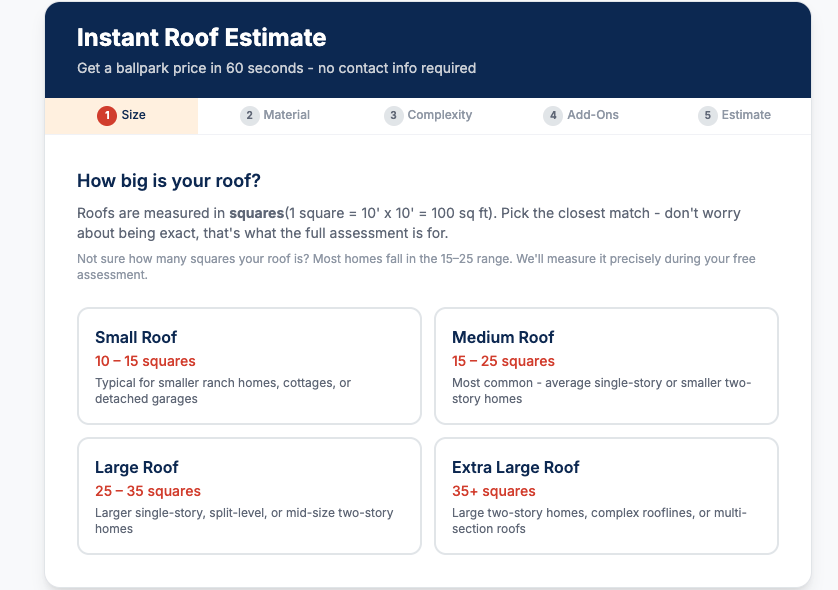
You do not have to figure this out alone. French Roofing’s team will walk you through available payment plans, help you understand your insurance payout, and make sure you know exactly what you are signing before any work begins. Getting a free estimate is the first step, and it costs you nothing to find out what your project will require and what financing fits your budget. Reach out to French Roofing today and get a clear picture of your options.
FAQ
What are the main roof replacement financing benefits?
Financing lets you replace your roof immediately without depleting savings, spreads the cost into predictable monthly payments, and allows you to choose better materials than you might afford upfront.
What is the best way to finance a roof with bad credit?
FHA Title I loans and contractor-specific financing programs are the most accessible options for homeowners with limited credit, since they do not require home equity and have more flexible approval criteria.
How do deferred-interest roof financing plans work?
These plans offer 0% APR during a promotional period, typically 3 to 12 months, but charge retroactive interest on the full original balance if you do not pay it off before that period ends.
Can I use insurance and financing together for a roof replacement?
Yes. If your insurance policy pays Actual Cash Value, the payout may cover only a fraction of the total cost. Financing covers the remaining gap so you can complete the full replacement without delay.
Does financing a roof affect my home equity?
Unsecured options like personal loans and FHA Title I loans do not affect your home equity. Home equity loans and HELOCs use your equity as collateral, which reduces your available equity until the loan is repaid.